I live in Florida. Down here, a lot of people make their pilgrimages to the theme parks, to the places where the story always ends the same way, where dreams are guaranteed, where the music swells on cue and the princess gets her castle. I understand the appeal.
My pilgrimage is different. Mine ends at a two-and-a-half-mile oval in Indianapolis, Indiana, where dreams come true and sometimes they do not. Where you can do everything right and still fall short. Where the full weight of a career, a season, a life’s work can be settled in less than the blink of an eye.
That is why it means more.
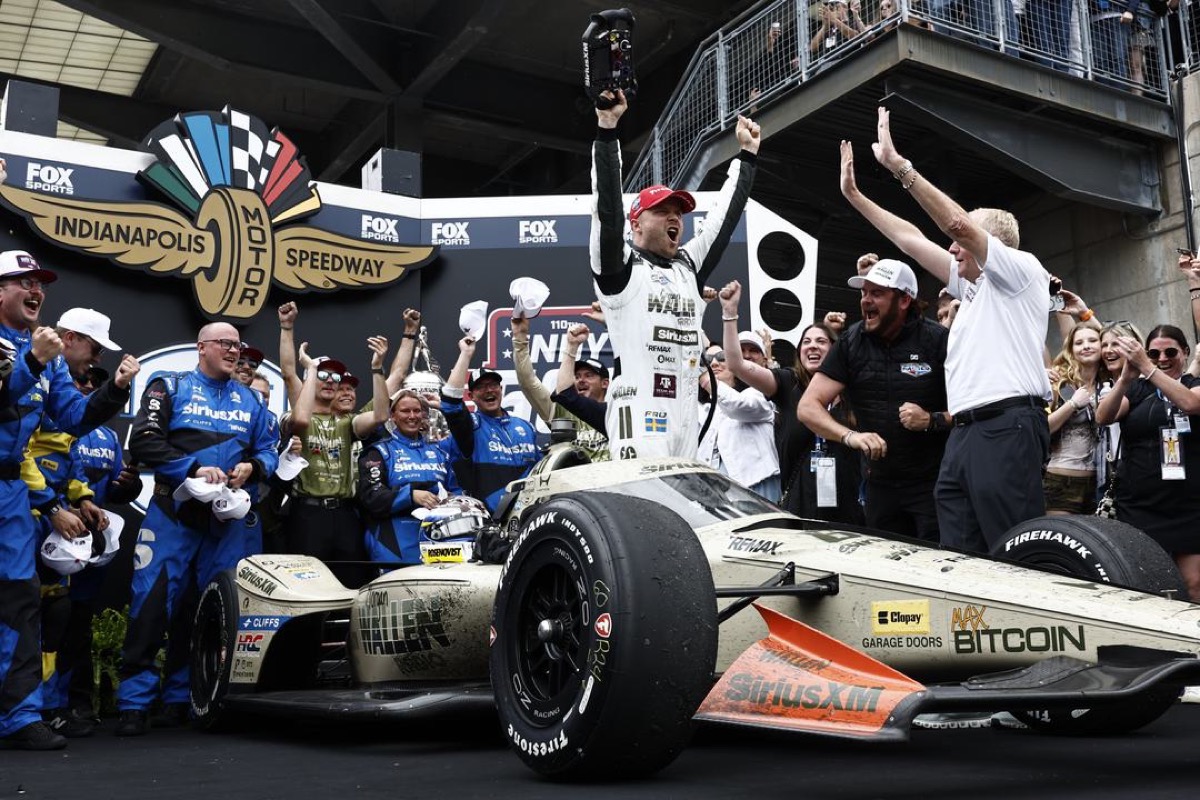
Felix Rosenqvist drove the number 10 car for Chip Ganassi Racing. The hottest team in racing. He left, or was let go depending on who you ask, and watched that same car, that same team, rattle off four championships without him. That is the kind of thing that follows a driver. It sits in the back of his mind in every press conference, every qualifying session, every race where things almost come together and then don’t.
He moved to Arrow McLaren. It still didn’t click. Then the team brought in a kid to take his seat, and we will get to that kid in a moment.
So Felix found himself at Meyer Shank Racing. The sports car team that could. Gritty, gutsy, mid-tier by budget but not by heart. Determined. The kind of team where nobody is handing you anything.
The doubts didn’t stop. They rarely do once they start. At Long Beach this spring, he was leading by a comfortable margin when a poorly-timed yellow flag handed the victory to the team he used to drive for. The universe apparently wanted to make sure he hadn’t forgotten what falling short felt like.
Then May came.
A new livery. Felix is used to those by now. This one was the least flashy of the year, the Morgan Wallen car, and maybe some of that country music magic was going to rub off. A new baby at home. A daughter named Stella. A new routine, a new outlook, and a newfound speed that showed up in session after session. Fastest in qualifying runs. Something had shifted.
The doubts were still there. Twenty-seven years of watching this race has taught me that doubt doesn’t go away. You just find a way to race through it.
On Sunday, Felix Rosenqvist raced through it.
He won the 110th Indianapolis 500 by 0.0233 seconds. In motorsport, margins don’t get much finer than that. In life, margins like that carry the weight of everything that came before them. Every race where he almost had it. Every year he watched a former teammate celebrate. Every press conference where he had to smile and say the right things while knowing he deserved to be somewhere else.
Dreams come true at Indy. This was one of them.
For Meyer Shank Racing, the story is its own kind of remarkable. They have two IndyCar wins. Both of them have come at the Greatest Spectacle in Racing. The Indy 500, twice. No other race. Just the biggest one on earth, twice.
Earlier this year, they received word that their sports car manufacturer, Acura, was scaling back. For a team built around that program, it was a real blow. If you are looking for a way to answer that news, winning the Indianapolis 500 is about as definitive a statement as the sport allows.
What better way to show the world you belong.
On the surface, some people would say David Malukas has lived a charmed life. Hasn’t paid his dues. Ended up, wrist cast and all — and yes that pun is intentional — driving for the team that year in and year out has the best record at Indianapolis Motor Speedway.
We all know someone like that. The person who seems to glide through life while the rest of us grind.
But there is always a story behind the story. The person who looks like they are skating along effortlessly is often like a swan on the water, gliding smoothly on the surface, paddling like hell underneath to stay afloat.
Malukas has talent. No question. But he was cast off by Arrow McLaren after a fluke wrist injury cost him his ride at exactly the wrong moment. He landed at AJ Foyt Racing and finished second in the 2025 Indy 500. A signal that something real was there. In 2026, Roger Penske called, and David Malukas found himself in the Verizon number 12 car, one of the most decorated seats in the history of this race.
He did everything right. A podium at the Grand Prix. A front row starting position for the 500. A fast car all day. Perfect pit stops. Flawless execution. A timely yellow and red flag with eight laps to go put the win firmly within reach. On the restart, he moved from sixth to second, then took the lead. One lap to go. The lead. Everything on the line and it was right there in his hands.
I was in the grandstands, 400 yards from the finish line, as the checkered flag was ready to be waved. As they flew past me, Malukas was ahead.
He lost by 0.0233 seconds.
I know that feeling. Not at 230 miles per hour, and not in front of 300,000 people. But I know what it is to do everything right, to have it in your hands, and to come up just short. In business. In projects. In relationships. In marriages. Life gives you those moments and they are drawn out over weeks and months and years. At Indy, it happens in a fraction of a second and you are confronted with it immediately, raw and exposed, with no time to process before the world is watching your face.
That is what this place does to people. That is why it is unlike anything else.
I have been coming to Indianapolis Motor Speedway since 2000. I am not done learning what it means.
I think about Dan Wheldon. One of the great heroes of my life as a racing fan. He finished second in 2009. He finished second in 2010. And then in 2011, he won it. The whole story of those three years, what it must have taken to come back after falling short twice in the biggest race in the world, and then to stand in Victory Lane. That is a story for another day. But I think about it every May.
Al Unser Jr. once said: “You just don’t know what Indy means.”
He is right. I have spent years trying to figure out how to explain it, and I am no closer than I was the first time I walked through those gates in 2000. The yard of bricks at the start-finish line. The Pagoda. The month of May. The way this place takes everything about life — the grinding, the setbacks, the fluke accidents, the frustration, the heartbreak, the moments where you finally break through — and compresses it into three hours each Memorial Day weekend.
Felix Rosenqvist knows what Indy means today. David Malukas knows it in a different way.
And every year, I leave knowing it a little more than I did when I arrived.
Robert Earl has attended the Indianapolis 500 since 2000.
Read next
- The 2027 Indianapolis 500 Buyer’s Bible — the planning hub for the 2027 race. Where to stay, where to sit, which days, and the two ways to book it.
- Gateway to the Last 7 Years — Kyle Kirkwood, Oliver Askew, VeeKay, Malukas, and seven years of covering the Road to Indy from that 2019 Saturday night at Gateway.
- Where Are They Now: Prescott Campbell at Williams F1 — a 33 Dreams alum who chased USF2000 and ended up at Williams.
- Three Drivers You Will One Day Wish You Saw Race in Person — why the era of a great IndyCar driver is shorter than you think, and why Alex Palou’s peak is right now.
- What Racing Passport Actually Does — how a Racing Passport trip gets built around an Indianapolis 500 weekend.
- Planning a Trip to the 2027 Indy 500 — the twelve-month playbook for the flagship race.
The 2027 Indy 500, guided
I'm guiding a small group through Carb Day, Legends Day and race morning in May 2027. You watch the race from your own seat, knowing what to look for. $400 holds your place.
See the guided Indy 500 weekend →