There is something about World Wide Technology Raceway at Gateway that feels different from other venues on the IndyCar calendar. Maybe it is the proximity of the grandstands to the racing surface, close enough that you feel the air displacement as the cars scream past. Maybe it is the intimacy of a one-and-a-quarter-mile oval tucked just outside St. Louis, where the city skyline lingers in the background and the smell of racing fuel hangs thick in the summer air. Maybe, for me personally, it carries weight for a reason that has nothing to do with the track itself and everything to do with what it represents in my own story.
Gateway was where it all started.
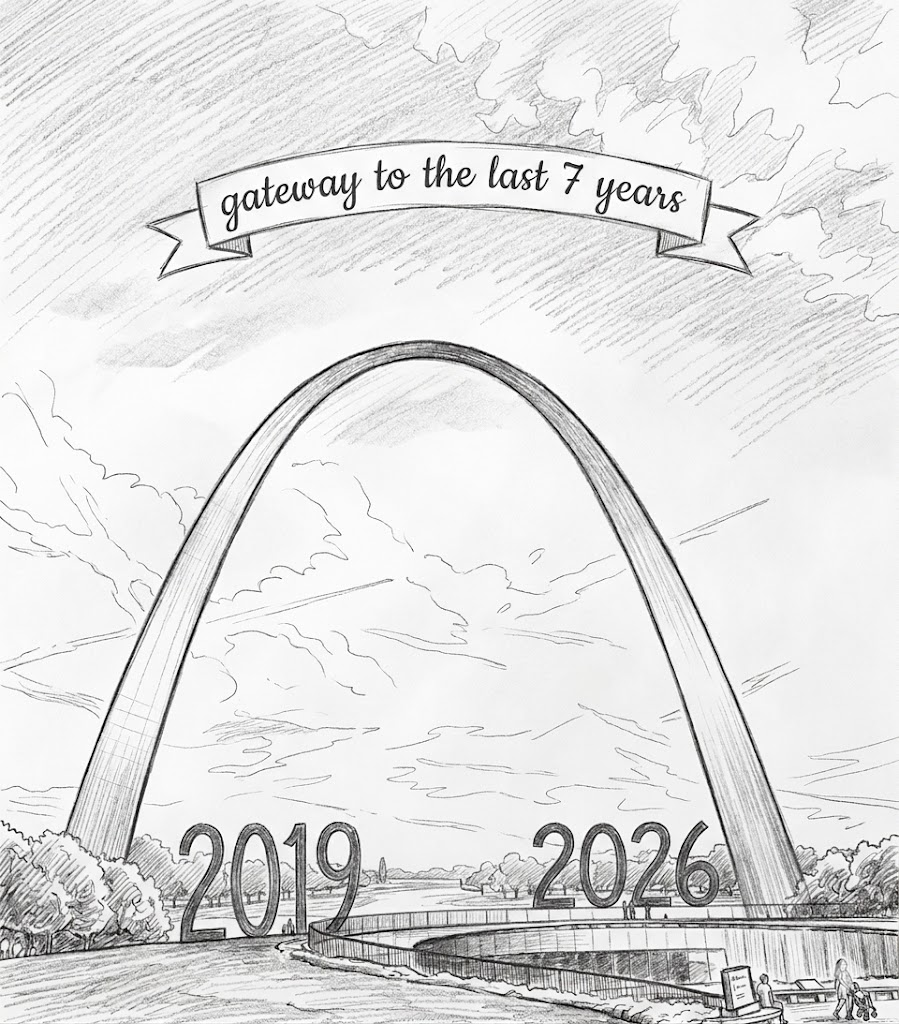
In 2019, World Wide Technology Raceway hosted the IndyCar Series for a Saturday night shootout under the lights. The kind of race that reminds you exactly why oval racing captures something that road courses cannot replicate. The urgency. The inches. The raw speed on a tight, high-banked surface. For a generation of motorsport fans, that kind of racing is in the blood. For me, that weekend was something else entirely. It was my first assignment as a member of the working media covering an IndyCar event.
The weekend that set the standard
Walking into Gateway that weekend, credential around my neck, notebook in hand, there was an immediate understanding that this was not going to be a typical fan experience. The access was different. The perspective was different. The responsibility was different. You were not just watching the race unfold. You were trying to document it, contextualize it, and tell the stories of the people inside it.
And the stories that weekend were plentiful.
The Road to Indy ladder system was in full operation, which at that time included the Indy Pro 2000 series alongside what was then known as Indy Lights and is now rebranded as Indy NXT. For anyone who covers open-wheel racing with any depth of focus, the ladder series are not a footnote to the main event. They are the main event in their own right. They are where the next generation is forged, where careers are launched or quietly put to rest, and where the narratives of future IndyCar champions are first written.
One name in particular wrote a memorable chapter that weekend. Kyle Kirkwood started at the back of the field in the Indy Pro 2000 race and drove through the entire pack to take the victory. It was the kind of performance that announces a driver in no uncertain terms. Controlled aggression. Mechanical sympathy. An instinct for finding space where none appears to exist. Also in that field were Sting Ray Robb, who came home fifth, and Jacob Abel, who finished twelfth. Names that would continue to surface in the open-wheel conversation in the years that followed. Watching that drive from Kirkwood, it was clear that he was not a name that would stay in the supporting series for long. His trajectory since then has proved that instinct right. He now competes in the IndyCar Series proper, a full-time front-runner who has continued to show the same tenacious qualities that were on display that evening in Illinois.
The Indy Lights race that same weekend was equally rich with future significance. Oliver Askew took the victory in a field of eight. Among those eight cars were Rinus VeeKay, Toby Lowery, and David Malukas, each at an early stage of a journey that would take them in very different directions. That a single eight-car Indy Lights field at a midwestern oval could contain that concentration of talent speaks to something genuine about the Road to Indy as a development environment. Context, of course, is only available in hindsight. But standing there in 2019, you sensed that the names you were writing down mattered.
Which makes the present moment worth noting. When Indy NXT takes to the track at Gateway this weekend, the field will exceed twenty cars. The growth of that series is a marker of something real happening at the developmental level of American open-wheel racing, and it adds another layer of meaning to a venue that already carries plenty.
But in 2019, all of that was still ahead of us. And I was a new media member trying to absorb everything at once.
Starts, stops, and the winding path of 33 Dreams
That Gateway weekend was the beginning of a journey that has seen more than its share of twists. The project that became 33 Dreams of Indy carried with it all the ambition and frustration that comes with building something from the ground up in the motorsport media space. There were false starts. There were moments when the whole thing seemed like it might not survive. There were periods of genuine uncertainty about what form the coverage would take, and whether there was an audience willing to find it.
Those who have followed along through the various iterations know the story better than most. Motorsport media, especially the kind focused on the developmental ladder rather than the headline act, does not come with guaranteed resources or a built-in infrastructure. You build it because the stories are worth telling, not because the path is clear. And through all of it, the restarts, the rebranding, the eventual arrival at what is now Racing Passport, the throughline has remained constant.
The drivers.
The human beings behind the helmets have always been the reason for doing this work. Not the lap times. Not the championship standings in isolation. Not the technical specifications of the machinery. The people. Their journeys from karting circuits to pro series to, for the fortunate few, the top rung of the American open-wheel ladder. And as I have learned across seven years of doing the show, sometimes the journeys arrive somewhere very different from where they started.
Prescott Campbell sat in that 2020 USF2000 conversation with me three weeks before COVID locked the world down. The dream he came on the show to chase was the Indianapolis 500. Where he is now is a Structural Engineer at the Atlassian Williams F1 Team. The dream came true. Not the way he was talking about it at age nineteen. A better way.
The consistent thread
What makes covering the Road to Indy compelling over a sustained period is the privilege of longitudinal perspective. When you were standing at the edge of the pit lane at Gateway in 2019, watching drivers take their first competitive laps on a high-speed oval, you were witnessing something that those drivers would carry with them for the rest of their careers. For many of them, a short oval like Gateway represented their first real reckoning with sustained high-speed cornering. A fundamentally different challenge than a road course or even a larger superspeedway, where the banking does more of the work.
Learning to drive an oval properly, learning to find the limit and live at it for sustained periods, is a skill that has to be developed in real time, in competition, under pressure. Some drivers take to it almost instinctively. Others have to work harder, suffer more setbacks, recalibrate their entire approach. Watching that process play out across multiple seasons, tracking which drivers adapted and which ones struggled, provides a kind of education about the craft of racing that you cannot get from a weekend visit.
The drivers who were taking those first oval laps in 2019 have since scattered across the motorsport landscape. Some have ascended to IndyCar. Some have found their home in other series. Some have moved into team management, engineering, or other roles within the sport. A few have stepped away from racing entirely. Each trajectory is a story unto itself, and the Gateway weekend exists as a kind of fixed point in time. A before-and-after marker that gives meaning to everything that came afterward.
A name that did not exist yet
Here is the thing about following a developmental series with enough consistency to develop genuine institutional knowledge. You start to recognize the patterns of how careers are built before the broader public catches on. And then, occasionally, someone comes along who disrupts even your own framework for understanding the sport.
Alex Palou was not even a consideration in the context of American open-wheel racing when I stood at Gateway in 2019. His name had not yet crossed the desks of most IndyCar followers, let alone the casual fans who fill the grandstands at Gateway on a Saturday night. The idea that within just a handful of seasons he would become a multiple IndyCar Series champion, and one of the most discussed drivers in the global motorsport conversation, was not part of anyone’s mental model of the sport at that point.
That reality serves as a useful corrective to any temptation toward overconfidence in predicting how the landscape will look even a few years down the road. The sport has a remarkable capacity for producing figures who arrive seemingly from nowhere and reshape the entire conversation. Palou’s emergence is perhaps the most dramatic recent example, but he is not the only one. The Road to Indy, and the broader global pipeline that feeds into American open-wheel racing, continues to produce drivers whose full significance only becomes apparent in retrospect.
It is one of the reasons that covering the developmental series, rather than simply following the established stars of the top tier, matters. You are watching the next chapter being written before the public has had a chance to read it.
For the argument on why you should also be in the grandstand watching that chapter get written, see Three Drivers You Will One Day Wish You Saw Race in Person.
Gateway, then and now
As the IndyCar Series returns to World Wide Technology Raceway this weekend, the track itself has not changed dramatically. The racing surface, the configuration, the compressed intensity of a short oval. All of it remains. The lights still illuminate the circuit with that particular quality that makes night racing on an oval feel slightly cinematic, slightly unreal, like the whole enterprise is being conducted at the outer edge of what physics ought to permit.
What has changed is the context surrounding it. The series that will race there now is both continuous with the one that raced there in 2019 and genuinely different from it. The names on the entry list have evolved. The competitive hierarchy has shifted. The storylines that will dominate the weekend’s coverage in 2026 could not have been fully anticipated by anyone who was there seven years ago.
And that, ultimately, is what keeps this work interesting. The sport does not stand still. The drivers grow, the competition evolves, and the coverage has to evolve with it. Racing Passport exists today because the stories that were worth following in 2019 are still worth following now, and because new stories, new drivers, new moments worth documenting continue to emerge from the places where careers are made.
Gateway was where this journey started. It is fitting that it remains on the calendar, a recurring landmark in a long and still-unfolding road.
If you want the trip planned the next time a race weekend like Gateway is on your list, that is what we do. Send us a note. One conversation. One trip. Built around what you are looking for.
Read next
- Where Are They Now: Prescott Campbell at Williams F1 — a 33 Dreams alum who chased USF2000 and ended up at Williams.
- Three Drivers You Will One Day Wish You Saw Race in Person — Hamilton in F1, Palou in IndyCar, Hamlin in NASCAR.
- What Racing Passport Actually Does — the long-form explainer for how Racing Passport plans the trip.
- Indy is Life — why the Indianapolis 500 sits at the center of everything Racing Passport does.