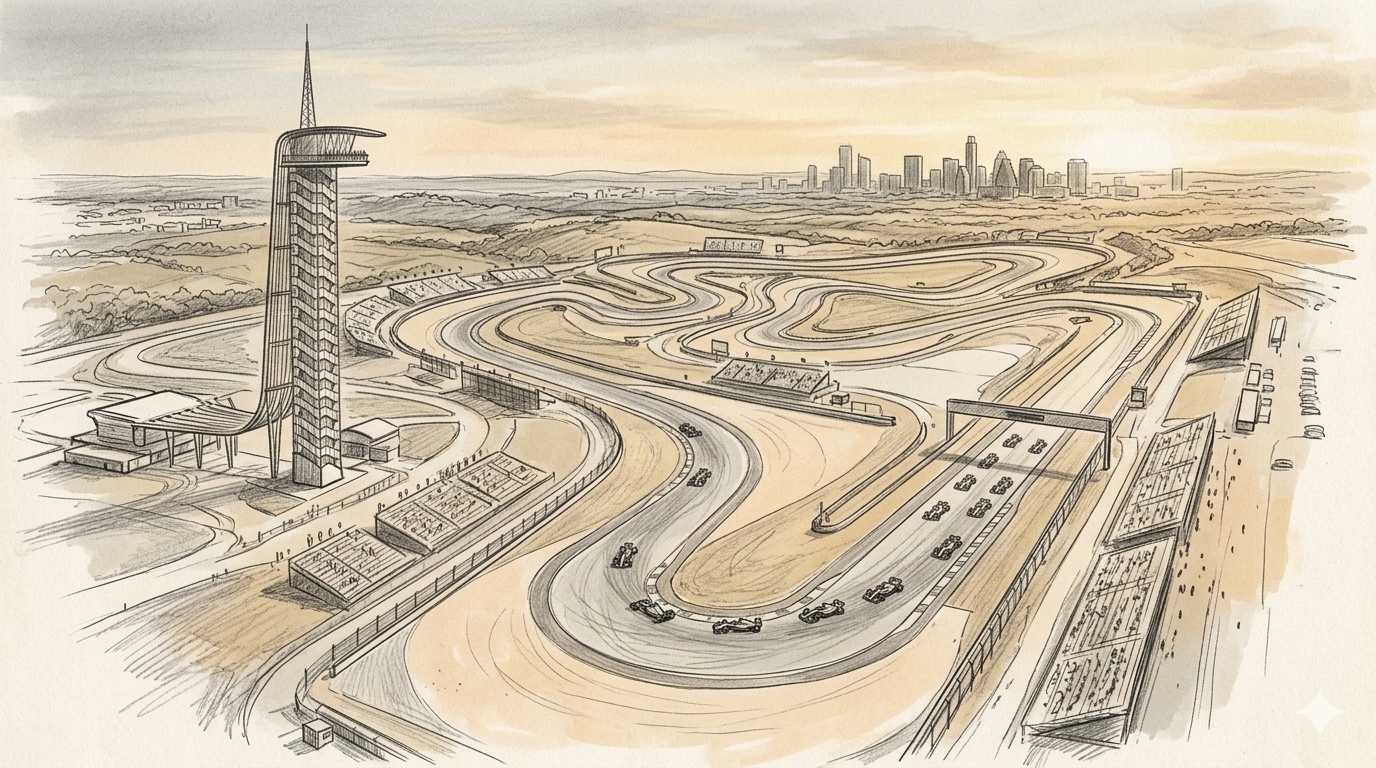
The United States Grand Prix is the Formula 1 race at Circuit of the Americas in Austin, Texas.
The race joined the F1 calendar in 2012. Circuit of the Americas was the first purpose-built Formula 1 venue constructed in the United States. The track was designed by Hermann Tilke with input from drivers and engineers brought in during the early planning stages. The famous uphill run to Turn 1, the high-speed esses through Turns 3 to 6, and the long back straight into the Turn 12 hairpin have become some of the most-recognized corners in modern F1.
The Austin race weekend is held in October. The American crowd is large, multinational, and heavily Mexican from the south, with strong Latin American attendance across the weekend. Austin during race week is the most American F1 weekend on the calendar, set against a Texan city with a music, food, and hospitality identity of its own.
For premium F1 travelers, a US Grand Prix trip is structurally different from European and Asian races. The base city is roughly twenty-five to thirty minutes from the circuit. The destination is in some ways the race weekend itself and in some ways the city of Austin around it. Texas Hill Country is to the west. The Texas extension catalog is its own dimension of the trip.
This is a planner’s guide to that combination. No pricing. The pricing conversation is downstream of the planning conversation. This piece is the planning conversation. For the general framework of planning a premium F1 trip across any venue on the calendar, the planner’s guide for premium F1 is the hub piece this article links back into.
The US Grand Prix in context
Circuit of the Americas opened in 2012 specifically for Formula 1. Bobby Epstein and the COTA ownership group secured the F1 contract before the venue was built. The 3.426-mile, twenty-turn permanent road course was designed to provide the kind of overtaking opportunities Tilke circuits had been criticized for lacking, with a long back straight, multiple heavy braking zones, and elevation changes through the first sector. The result has been one of the more highly-regarded modern venues on the calendar from a racing-product perspective.
The October timing puts the race late in the F1 season. The weather is typically warm in Austin during race week, with daytime temperatures in the 80s Fahrenheit and cool evenings. Race weekend rain has happened and has shaped some of the most memorable US Grand Prix results.
The crowd profile is heavily American with strong Mexican attendance from across the southern border. The Mexican fanbase travels to Austin in large numbers, frequently making the US Grand Prix the second-busiest weekend in Texas after South by Southwest. Combined with the Texan and broader American audience, the crowd at Austin is one of the largest and most enthusiastic on the F1 calendar.
The race weekend overlaps with a music festival programmed at the circuit. Major artists perform Friday and Saturday nights at the COTA main stage. Premium attendees treat the music programming as a parallel layer to the race weekend rather than the main event, but the combination shapes the crowd density and the rhythm of the weekend.
How an Austin race weekend actually runs
The on-track weekend at Austin follows the standard F1 shape:
- Friday: free practice 1 and 2
- Saturday: free practice 3 in the morning, qualifying in the afternoon
- Sunday: the race, typically in the early afternoon
The off-track shape for a premium attendee:
Wednesday or Thursday. Arrival day. Most premium travelers arrive Wednesday or Thursday to settle in Austin before the race weekend builds. The downtown core fills with race-week energy by Thursday evening.
Thursday. Premium hospitality programs at the circuit open Thursday for paddock walks and venue orientation. Downtown Austin is in race mode with restaurants at full booking and the music venues on Sixth Street and Rainey Street at peak activity.
Friday. First day cars are on track. Practice sessions through the day. Music programming at the circuit begins Friday evening for those with festival access.
Saturday. Qualifying day. The grid for Sunday is set. Saturday evening is the social peak of the race weekend.
Sunday. Race day. The trip’s defining day. Post-race traffic leaving COTA is a known operational consideration. Many premium attendees plan a late departure or a Sunday-night Austin stay rather than fight the post-race exit.
Monday. Departure day or the start of a Texas extension. Hill Country wineries, the Houston and Galveston extension, San Antonio, the Texas BBQ trail, or a private ranch stay are common back-end structures.
The Austin race weekend rhythm is built around the city of Austin as the base and the circuit as the day trip. Premium attendees typically stay downtown, use a driver to and from COTA each day, and treat the city itself as the post-race experience.
Where to base yourself
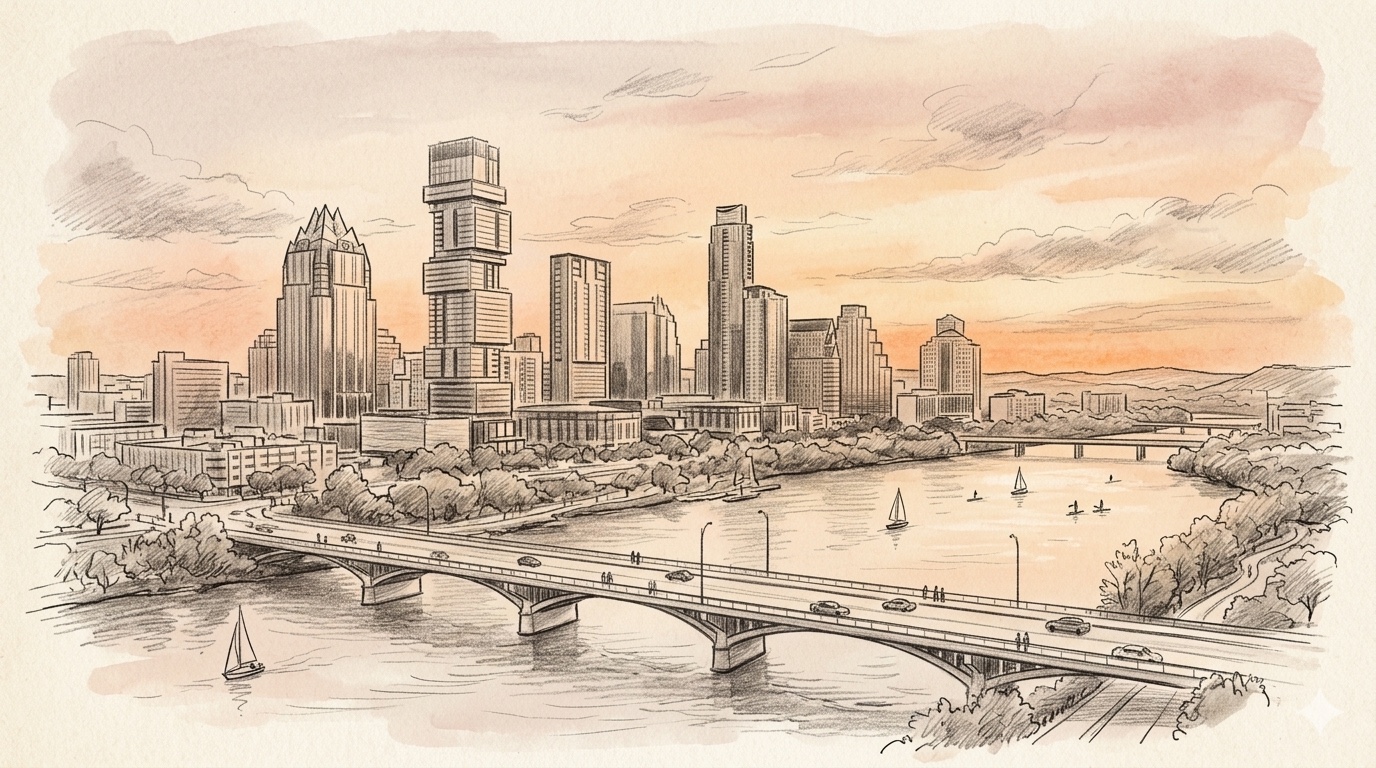
Austin has strong premium hotel inventory concentrated in the downtown core, with additional options in the South Congress neighborhood and out in the Hill Country.
Downtown Austin. The default premium base for the US Grand Prix. The Fairmont Austin, the Four Seasons Hotel Austin, the JW Marriott Austin, the Driskill, and Hotel ZaZa. Walking distance to Lady Bird Lake, Sixth Street, Rainey Street, and the downtown dining scene. Daily transfer to COTA is roughly twenty-five to thirty minutes by car.
South Congress and SoCo. The Hotel San José, Hotel Saint Cecilia, the South Congress Hotel. A quieter, design-focused alternative to the downtown core. Strong restaurant proximity. Daily transfer to COTA is roughly twenty-five minutes.
East Austin. The Carpenter Hotel and a growing inventory of design-driven boutique properties. Race-week alternative to the downtown core for travelers who want the East Austin food and music scene.
Hill Country. Lake Travis, Spicewood, Driftwood, and Dripping Springs as a Hill Country base. The Commodore Perry Estate, Miraval Austin, and a handful of ranch-style luxury properties. Daily transfer to COTA is forty-five minutes to an hour. Works as the base for buyers structuring the trip as a Hill Country stay with the race weekend inside it.
Private ranch. Texas ranch hospitality at the premium tier. A small inventory of high-end properties accept race-week guests. Trade-off is the transfer distance and the isolation from the city core.
The base decision drives the trip shape. Downtown Austin is the standard race-week base. South Congress and East Austin are quieter neighborhood alternatives. Hill Country is the choice for a longer Texas trip with the race weekend as one anchor.
Hospitality and viewing options at Circuit of the Americas
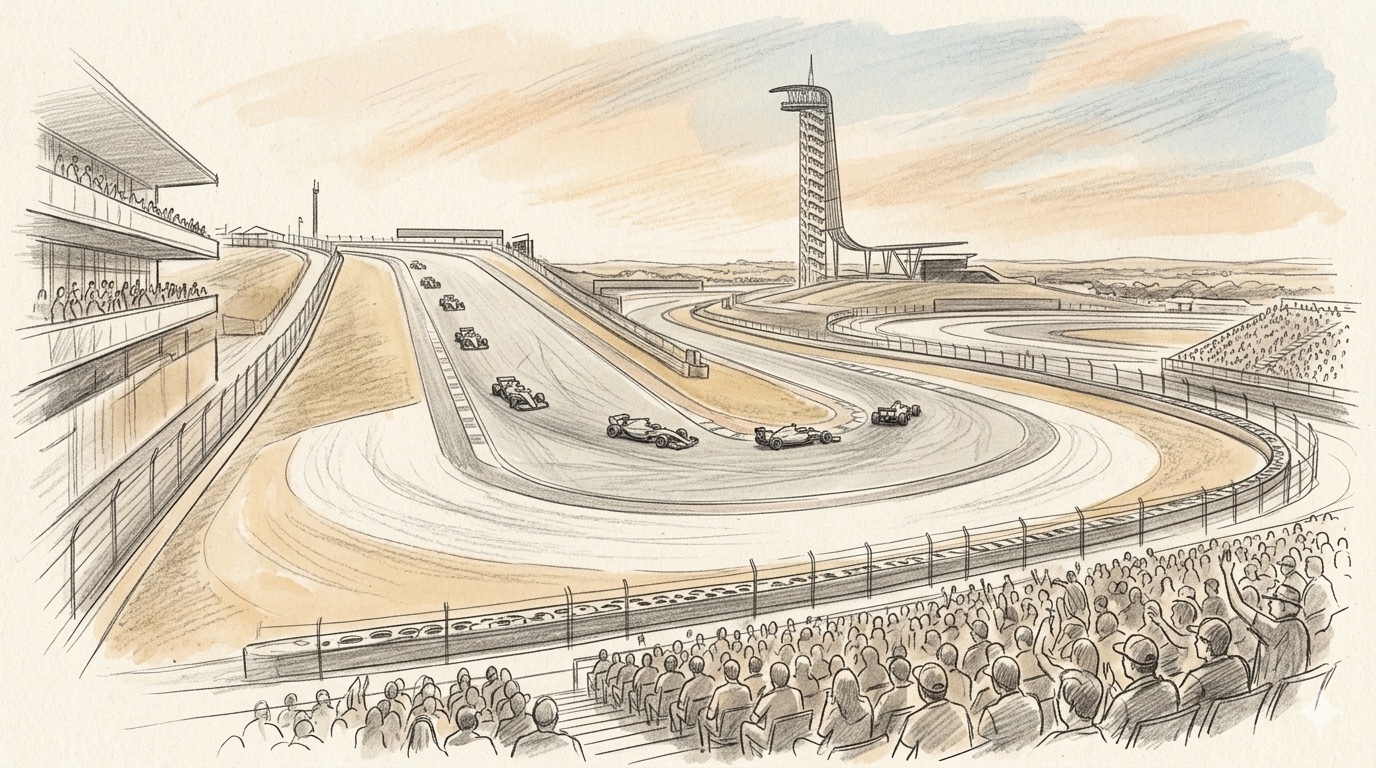
The COTA hospitality landscape is unique to the venue because of the permanent circuit infrastructure and the long-standing US Grand Prix hospitality programs.
Paddock Club. The official F1 hospitality program operates at COTA the same as at every venue. The Paddock Club suites at COTA are positioned over the main pit straight with views of the start-finish line, the pit lane, and the Turn 1 uphill braking zone. Catering, pit lane access, paddock walks, and driver appearances at the suite tier.
T1 Club. The Turn 1 hospitality program at COTA is one of the most-named premium options at the venue. The hospitality structure sits at the apex of the uphill Turn 1 braking zone. Visual access to one of the most iconic corners on the F1 calendar from a premium hospitality structure with private catering and lounge service.
9 Club. A turn-specific premium hospitality program at Turn 9. Different view, different vibe.
Velocity Lounge. Trackside premium hospitality with a casual high-end feel. Lower commitment than Paddock Club but with strong race-day positioning.
Champions Club. Suite-level hospitality at COTA with strong views over the back straight and into the braking zone at Turn 12.
Main Grandstand and turn-specific grandstands. Premium grandstand seating at the start-finish straight or at iconic corners like Turn 1, Turn 12, and Turn 15 delivers strong race-day viewing at a lower hospitality tier than the suite programs. For a seat-by-seat breakdown, see COTA: Paddock Club vs grandstand vs Turn 1.
The right tier at Austin depends on whether the buyer wants the inside-paddock experience (Paddock Club) or the iconic-corner-with-hospitality experience (T1 Club, 9 Club, Champions Club). Both are valid. The corner-specific hospitality buildings are part of the COTA experience.
The transfer reality
Austin is operationally friendlier than most F1 venues for the airport-to-base segment but has a single notable bottleneck on race-day exit.
Austin-Bergstrom International Airport is roughly fifteen minutes from downtown by car. Circuit of the Americas is twenty-five to thirty minutes from the downtown core in normal traffic. Race-week traffic on the highways into and out of COTA is the operational issue most premium attendees plan around.
Transfer options most premium travelers consider:
Private driver. The standard premium option. Predictable through the race weekend. The driver handles the airport, the daily circuit transfer, and the dinner reservation logistics in the downtown core.
Helicopter. A common premium option for race day specifically. Helicopter pads at COTA accept on-circuit arrival. Booking is through charter services. Reduces the post-race traffic exit.
Rideshare. Uber and Lyft are abundant in Austin. Race-day surge is significant. Post-race demand peaks immediately after the checkered flag, which is when the traffic out of COTA is heaviest.
Driving yourself. Premium attendees rarely drive themselves to COTA on race day. The parking logistics and the post-race exit are not the operational layer the trip is built around.
The transfer plan at Austin is rarely a single mode. Most premium itineraries use a driver for the standard race weekend with a helicopter as the race-day option for travelers who want to bypass the post-race traffic.
The Texas extension
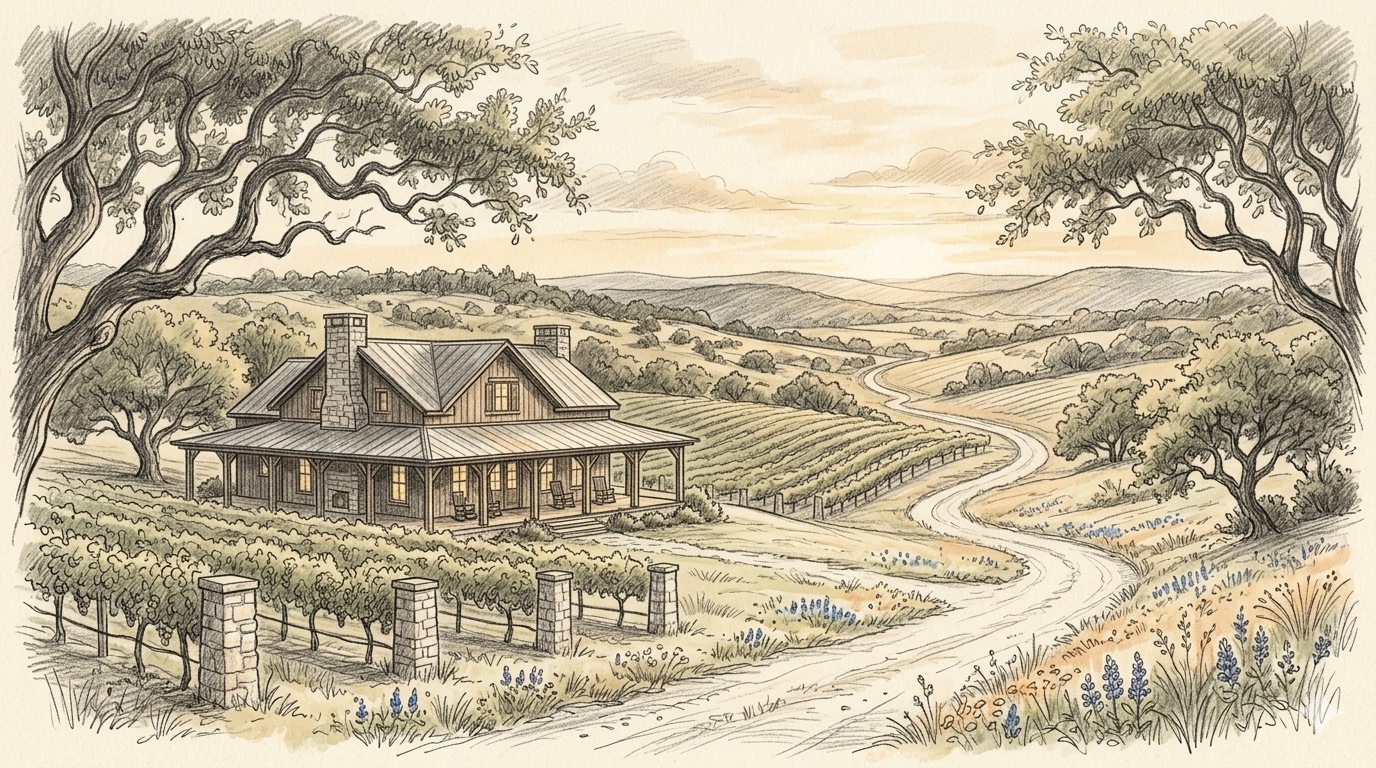
The US Grand Prix sits at a strong launching point for a Texas extension or a broader American Southwest itinerary.
The common extensions:
Hill Country wineries. A short drive west of Austin into the Texas Hill Country wine country. Driftwood, Dripping Springs, Fredericksburg, and the broader Texas Wine Trail. Private tastings, distillery visits, ranch lunches.
San Antonio. Roughly ninety minutes south by car. The Hotel Emma in the Pearl District as a premium base. Different rhythm from Austin, strong Texas history, the River Walk.
Houston and Galveston. Two to three hours east. Houston for the urban extension, NASA Johnson Space Center, the museum district, the restaurant scene. Galveston for the Gulf Coast back end.
Big Bend and the Marfa cultural axis. A long flight or driver-route west into far West Texas. Marfa for the Donald Judd Chinati Foundation and the contemporary art scene. Big Bend National Park for the landscape. Often paired with the small Hotel Saint George or Cibolo Creek Ranch as the premium base.
Private Texas ranch. Premium ranch hospitality across Texas. King Ranch, Cibolo Creek Ranch, and smaller private ranches available through hospitality networks. Hunting, fly fishing, riding, the broader Texas ranch culture.
The Texas BBQ trail. Franklin Barbecue in Austin, Snow’s BBQ in Lexington, Louie Mueller in Taylor, the broader Central Texas barbecue scene. Often a single-day extension built into the Austin trip.
Onward to other American destinations. Some premium travelers structure the trip as Austin plus an onward flight to Aspen, Park City, Los Angeles, San Francisco, or New York.
The right extension depends on what the trip is meant to deliver. Hill Country for wineries and ranch hospitality. San Antonio for Texas history. Big Bend and Marfa for the landscape-and-culture step-change. Private ranch for the full Texas immersion.
When to plan a US Grand Prix trip
The realistic minimum planning horizon for a premium US Grand Prix trip is nine to twelve months. The realistic horizon for the top-tier downtown Austin hotels and the iconic Hill Country properties during race week is twelve months.
The inventory cycle:
Downtown Austin hotel inventory at the top tier is committed through hospitality networks well in advance. The Fairmont, the Four Seasons, the JW Marriott, the Driskill, and Hotel ZaZa hold race-week inventory ahead of the public booking window.
Paddock Club allocation at COTA runs on the F1 cycle.
T1 Club, 9 Club, Champions Club, and the Velocity Lounge hospitality structures release through hospitality networks before public availability.
Race-week dinner reservations at the iconic Austin restaurants book months in advance. Franklin Barbecue requires its own planning layer for race week.
The buyer who starts planning six months ahead can still build a US Grand Prix trip. The top-tier downtown rooms may be unavailable. Strong premium alternatives still exist.
Why an advisor matters at Austin specifically
The advisor case for Austin is concentrated in three areas.
First, the downtown hotel inventory at the premium tier is committed through hospitality networks well in advance. The advisor sources rooms the public booking window will not show.
Second, the COTA hospitality program access. Paddock Club, T1 Club, 9 Club, Champions Club, and the Velocity Lounge are allocated through specific programs. Direct public access is limited.
Third, the Texas extension layer. Hill Country wineries, private ranches, Big Bend, Marfa, and the broader Texas itinerary benefit from coordinated planning. The advisor sources properties and access the public booking windows do not show.
The race weekend logistics are operationally simpler than Monaco or Singapore. The complexity is in the inventory access, the hospitality program selection, and the Texas extension shape.
Common questions about a US Grand Prix trip
When is the US Grand Prix held?
The US Grand Prix at Circuit of the Americas is typically held in October. The exact dates vary year to year based on the Formula 1 calendar. The race itself runs on Sunday afternoon.
Where should I stay for the US Grand Prix?
Downtown Austin is the default premium base, with the Fairmont, Four Seasons, JW Marriott, the Driskill, and Hotel ZaZa as iconic options. South Congress and East Austin offer quieter neighborhood alternatives. Hill Country works for travelers structuring the trip as a Texas stay with the race weekend inside it.
What is special about Circuit of the Americas?
COTA is the first purpose-built Formula 1 venue in the United States. The track features one of the most iconic Turn 1 braking zones in F1, with the uphill approach and the elevation change creating strong overtaking opportunities. The October timing, the Texas crowd, and the music programming at the circuit are all defining features of the US Grand Prix weekend.
Is Paddock Club worth it at the US Grand Prix?
It depends on what the buyer wants from the weekend. Paddock Club at COTA is excellent. T1 Club, 9 Club, Champions Club, and the Velocity Lounge are all credible alternatives at the premium tier. The right tier depends on whether the buyer wants the inside-paddock experience or the iconic-corner-with-hospitality experience.
How far is COTA from downtown Austin?
Roughly twenty-five to thirty minutes by car in normal traffic. Race-week traffic out of COTA on Sunday after the race is the operational consideration most premium attendees plan around.
How long should a US Grand Prix trip be?
The race weekend itself runs Thursday or Friday through Sunday or Monday. Premium travelers commonly extend the trip into Texas Hill Country, San Antonio, Houston, Big Bend, or a private ranch stay. A week is a common premium trip length.
Can I combine the US Grand Prix with another F1 race?
The F1 calendar places the US Grand Prix and the Mexico City Grand Prix back to back most years. Combining both as a single trip is one of the most common two-race American itineraries. Premium buyers building this trip typically use a private aviation transfer between Austin and Mexico City.
Why do I need a travel advisor for the US Grand Prix?
Downtown Austin hotel inventory at the premium tier is committed through hospitality networks well in advance. The COTA hospitality program access is allocated through specific programs. The Texas extension benefits from coordinated planning. The advisor sources the inventory the public booking window will not show and orchestrates the multi-day Texas trip as a continuous experience.
How to start the conversation
The right time to plan a US Grand Prix trip is earlier than feels intuitive. Nine to twelve months ahead is the realistic minimum. Twelve months ahead is normal for the top-tier downtown Austin rooms and the iconic Hill Country properties during race week.
Tell us the year, the group, the base preference (downtown Austin, South Congress, East Austin, Hill Country, private ranch), and any extension interest (Hill Country wineries, San Antonio, Big Bend and Marfa, private ranch, Mexico City). We come back with the plan.
See the 2026 US Grand Prix trip page →
Read next
- How to Plan a Premium Formula 1 Trip — the planner’s guide for the first-time premium F1 traveler across the calendar.
- How to Plan a Monaco Grand Prix Trip — the planner’s guide for the bucket list race.
- How to Plan an Italian Grand Prix Trip — Monza, the tifosi, Milan as the base, the Lake Como extension.
- How to Plan a Singapore Grand Prix Trip — the night race, the Marina Bay base, the Southeast Asia extension.
- How to Plan an Abu Dhabi Grand Prix Trip — the season finale, the Yas Hotel, the Dubai and Maldives extensions.
- How to Plan a Las Vegas Grand Prix Trip — the Saturday-night Strip race, hotel balcony viewing, the American extension.
- How to Plan a Miami Grand Prix Trip — Hard Rock Stadium, South Beach as the base, the Florida and Caribbean extension.
- What Racing Passport Actually Does — the long-form explainer on how Racing Passport plans the trip.