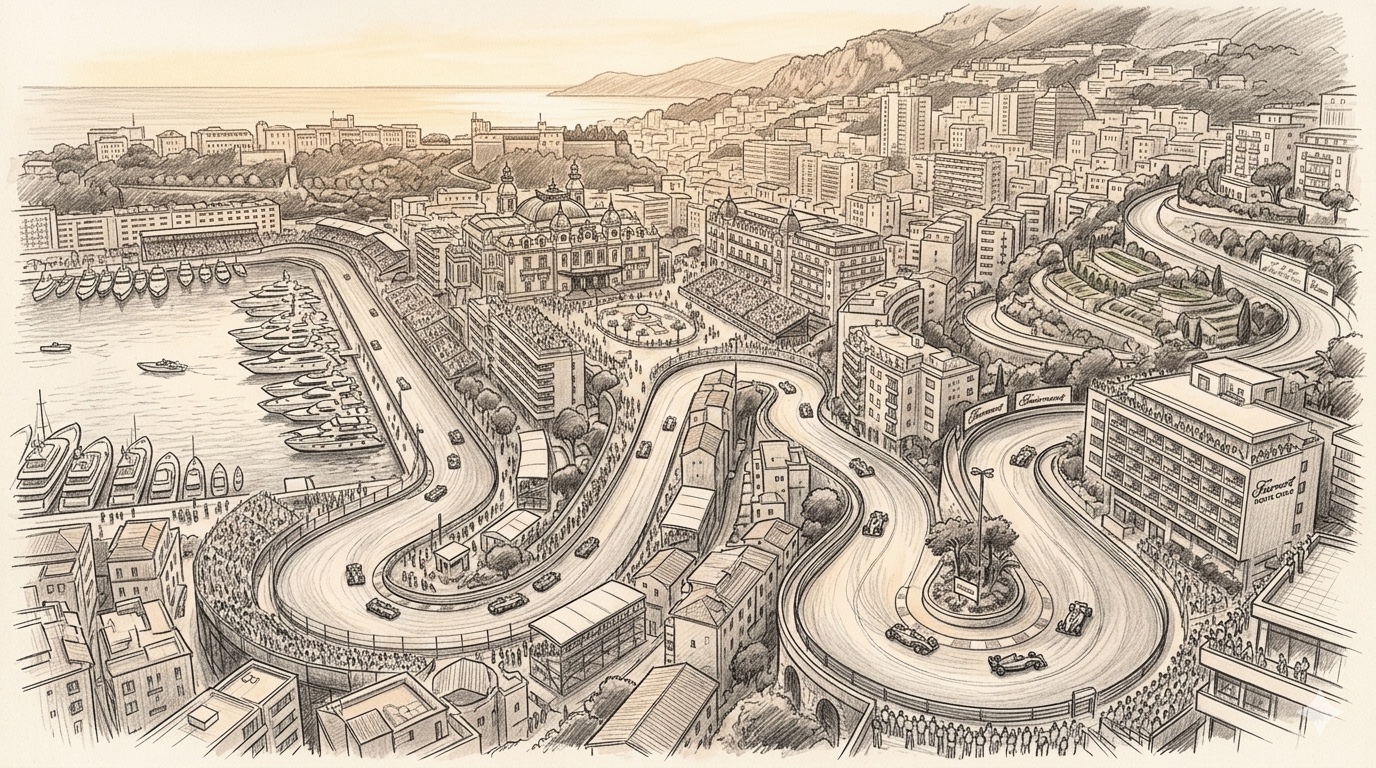
The Monaco Grand Prix is the bucket list weekend on the Formula 1 calendar for a reason.
The race has been on the calendar since 1929. The circuit is the streets of Monte Carlo. The cars are bigger than the track was ever designed for. Inches separate the wheels from the Armco barriers, lap after lap, for the better part of two hours. It is also one of three races in the Triple Crown of Motorsport, alongside the Indianapolis 500 and the 24 Hours of Le Mans. Only Graham Hill has ever won all three.
For premium F1 travelers, Monaco is usually the first or last race on the bucket list, almost never one of the middle ones.
The catch is that Monaco is the most operationally complex F1 weekend on the calendar. Not because the racing is harder to access. Because the principality itself is small, the inventory is constrained, and every premium logistic compounds against every other. A buyer who experienced a Grand Prix at Yas Marina or at Singapore will find that none of those decisions transfer. Monaco operates on its own rules.
This is a planner’s guide to those rules. The decisions, the hospitality landscape, the hotel zones, the transfer reality, and the trip around the trip that makes the week worth the flight.
No pricing in this piece. The pricing conversation is downstream of the planning conversation. This piece is the planning conversation. For the general framework of planning a premium F1 trip across any venue on the calendar, the planner’s guide for premium F1 is the hub piece this article links back into.
The Monaco Grand Prix in context
Monaco has been part of the Formula 1 World Championship since the championship was created in 1950. The race itself predates the World Championship by more than two decades. Every era of F1 has a Monaco signature on it. Fangio. Stewart. Senna. Schumacher. Hamilton. Rosberg. Verstappen. Leclerc.
The Triple Crown of Motorsport tradition pairs Monaco with the Indianapolis 500 and the 24 Hours of Le Mans. Three races, three forms of motorsport, three completely different demands on a driver. For most premium F1 fans, attending Monaco is a Triple Crown story before it is anything else.
The race weekend is the principality’s biggest commercial week of the year. Hotels, restaurants, beach clubs, and yachts all reset their pricing and their access policies for race week. The rhythm of the principality changes Wednesday and returns Tuesday.
How a Monaco race weekend actually runs
Monaco used to be the outlier on the F1 calendar with Thursday free practice followed by a Friday rest day. The schedule changed in 2022 to align with the rest of the calendar. Today the on-track weekend runs the standard F1 shape:
- Friday: free practice sessions 1 and 2
- Saturday: free practice 3 followed by qualifying
- Sunday: the race
The off-track shape for a premium attendee runs longer:
Wednesday. Arrival day for buyers who want to be settled before the principality fills.
Thursday. Arrival day for most premium travelers. The principality is already in race mode. Hotel terraces are open. Sponsor and partner events at the major properties begin.
Friday. The first day cars are on track. Paddock activity is at its most observational. Team strategy data is most visible.
Saturday. Qualifying day. The grid for Sunday is decided here. The atmosphere shifts from observational to competitive. The harbor reaches peak density.
Sunday. Race day. The whole principality is at maximum density. Race-day morning logistics are their own exercise.
Monday. Departure day, or the start of the Riviera extension.
Monaco does not have an off-circuit destination separate from the venue. The principality is the venue and the destination simultaneously. That changes the trip rhythm compared to a Grand Prix where the city is forty minutes from the track.
Where to base yourself
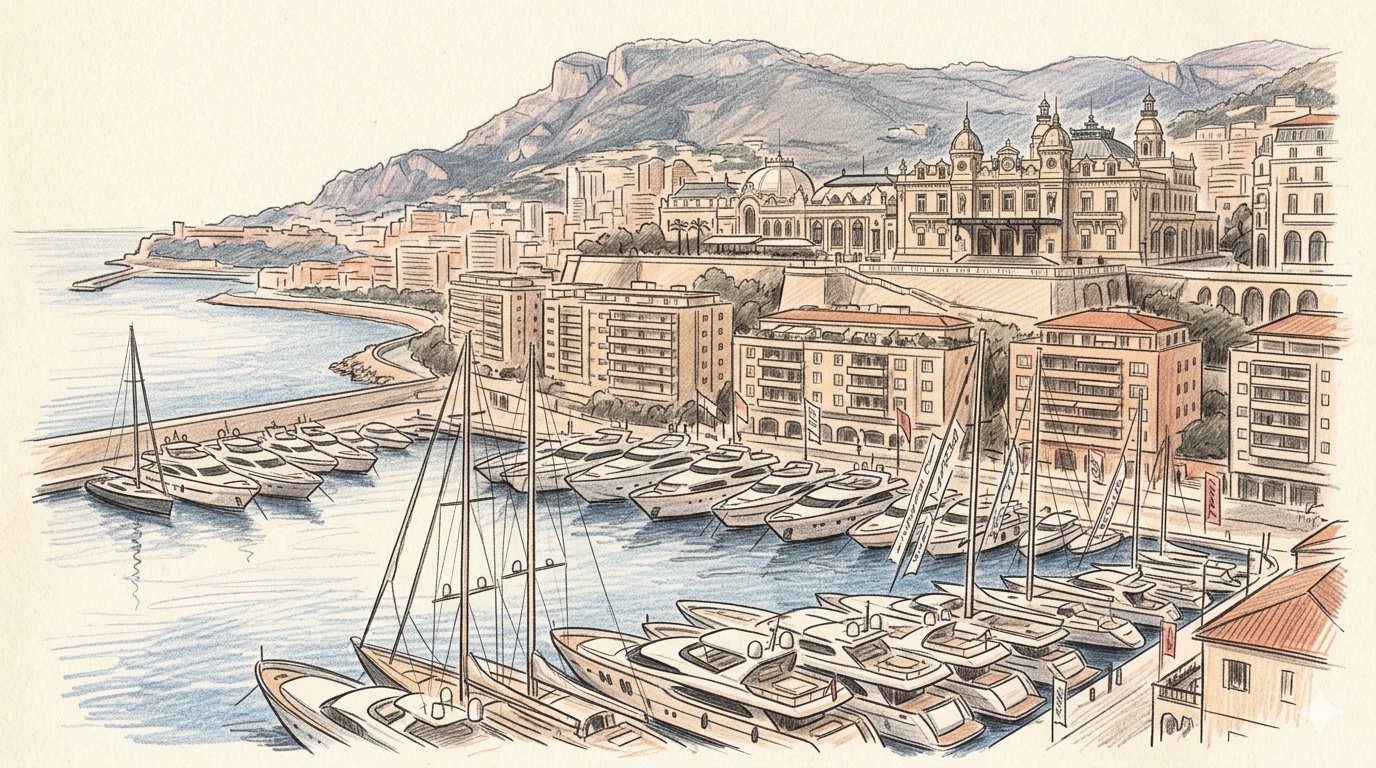
This is the most consequential decision of a Monaco trip and the one buyers most often default on. There are three logical answers.
Hotels inside the circuit footprint. Hotel de Paris Monte-Carlo, Hotel Hermitage Monte-Carlo, Hotel Metropole, Fairmont Monte Carlo. These properties either overlook a section of the circuit or sit on it. The Fairmont in particular straddles the famous hairpin that bears its name. The walk to your hotel terrace is the hospitality. Inventory at this tier is the most constrained option in any premium trip. The trade-off for the in-circuit experience is that the principality during race week is sensory-saturated. Some travelers find that the right answer. Some find it overwhelming by Saturday afternoon.
Hotels just outside the principality. Properties in Beausoleil, Cap d’Ail, or along the immediate French coast that sit minutes from Monaco by car or train. Quieter at night. Race-week buzz available but not surrounding you. Trade-off is the daily transfer in and out, which gets complex on race day.
The French Riviera base. Cap Ferrat, Èze, Villefranche-sur-Mer, or Nice as the trip base, with daily helicopter or driver transfers into Monaco. The Riviera base extends the trip into a true week. Trade-off is the additional logistical layer to manage and the disconnect from the principality’s nighttime energy.
There is no universally right answer. The right answer depends on group size, on what the buyer wants the week to feel like, and on whether the race weekend is the whole trip or part of a longer Riviera stay. The first question worth answering when planning Monaco is which of those three feels like your week. The rest of the trip follows from that decision.
Hospitality and viewing options unique to Monaco
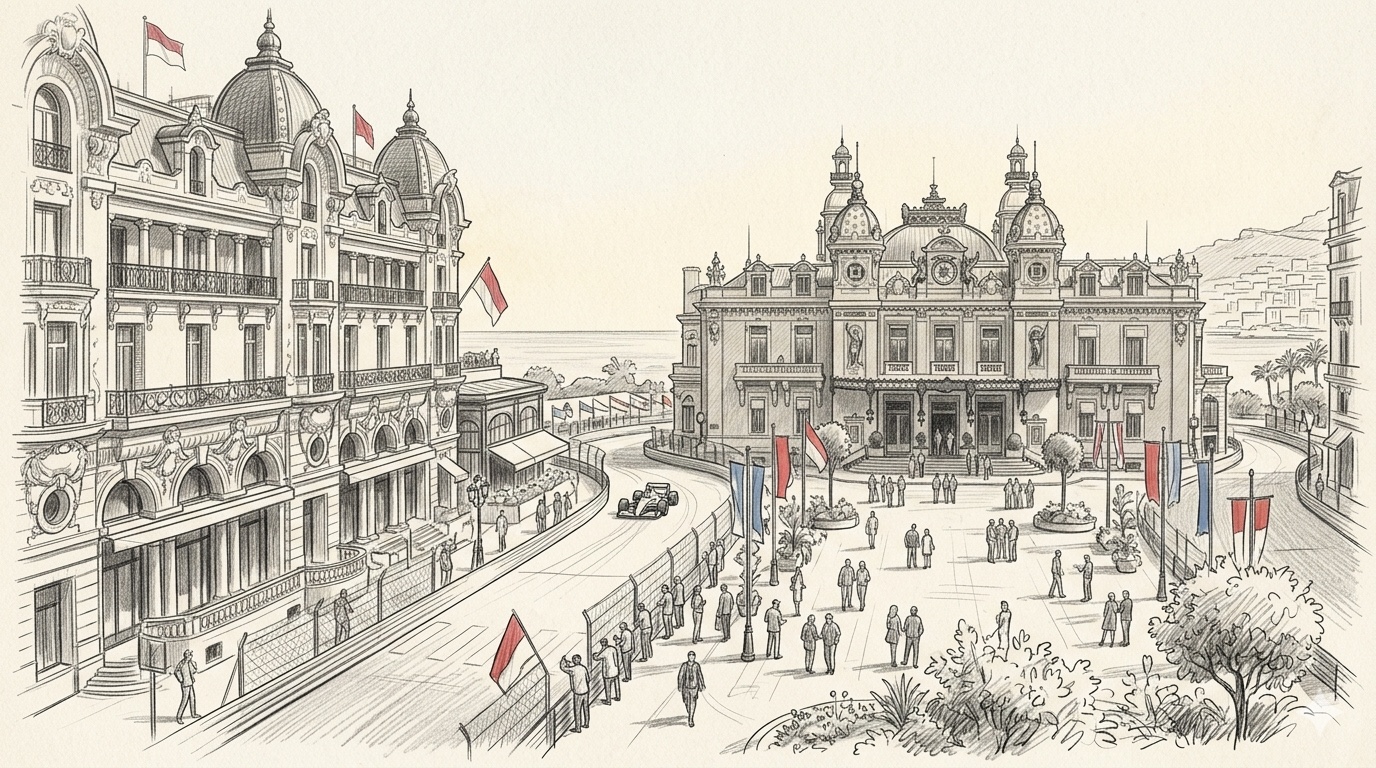
Premium F1 viewing at most venues comes down to grandstand seat versus hospitality suite. Monaco has a wider menu because of the geography of the principality.
Yacht hospitality. Yachts moored in the harbor become race-day viewing platforms with private catering and tender service from shore. This product exists at scale only at Monaco. Yacht inventory is allocated through a small number of brokers and is the earliest-closing category of premium product at the race weekend. The yacht experience itself ranges from corporate group platforms hosting fifty to fully private vessels with one host party.
Hotel terrace viewing. Limited to properties that overlook a section of the circuit. The terraces at the in-circuit hotels are part of the iconic Monaco view. A handful of private apartments are also released into hospitality programs each year. Terrace inventory is constrained.
Paddock Club at Monaco. The official F1 hospitality program is available at Monaco the same as at every other venue. The Monaco implementation is shaped by the principality’s footprint. Paddock Club suites at Monaco do not always have the suite-style track views found at permanent circuits. The Monaco Paddock Club premium is the access (paddock, pit lane, F1 hospitality program) more than the suite view itself.
Premium grandstand seating. A handful of grandstands at Monaco offer the most cinematic on-track viewing available. The Tabac grandstand for the harbor stretch. La Rascasse for the chicane and pit exit. Casino Square for the start of the lap and the run down to Mirabeau. The right premium grandstand at Monaco is sometimes a better viewing product than a hospitality suite further back. Worth understanding before defaulting to a suite by reflex.
The right tier is not automatic. It depends on which question the buyer is answering. “The best view” leads to one answer. “The most immersive social hospitality” leads to a different answer. “I want to walk through the paddock on race morning” leads to a third. Different buyers, different answers.
The transfer reality
This is the operational story of the Monaco weekend and the area where the most premium trips quietly go wrong.
Nice Côte d’Azur Airport is the gateway airport for most international travelers. The drive from Nice to Monaco is roughly thirty minutes in normal traffic. Race-week traffic, especially on Saturday and Sunday, can multiply that.
The transfer options most premium travelers consider:
Private driver. The standard premium option. Predictable on Wednesday and Thursday. Vulnerable to traffic on Saturday and Sunday, especially around race-day morning.
Helicopter Nice to Monaco. Approximately a seven-minute flight. Operates regularly during race week. The most reliable race-day option. Requires advance booking and is weather-dependent.
Train. The TER regional service runs between Nice and Monaco. Roughly twenty-five minutes. Public transport. Most premium travelers do not consider it as a primary mode, but the ones who do find it useful as a contingency when traffic conditions change.
Inside the principality. Monaco is walkable for most able-bodied attendees. The principality is roughly two square kilometers end to end. Most premium trips inside the principality are on foot.
The transfer plan is rarely a single mode. The right answer is a layered plan. Helicopter held for race day, driver for the other days, train option in reserve. The plan is part of the product.
The French Riviera extension
The week around Monaco GP is its own product. The principality empties on Monday and Tuesday. The Riviera is at its early-summer best. For premium travelers, the extension is often the part of the trip remembered longest.
The geography:
Cap Ferrat. Twenty minutes by car from Monaco. Quiet, residential, premium. Hotel base option for the entire trip or the extension only. Restaurants and beach clubs operating in a different rhythm than the principality.
Èze. A medieval village on a hilltop above the Mediterranean, between Nice and Monaco. Day-trip destination from any base. The sunset terrace at La Chèvre d’Or is one of the iconic Riviera experiences.
Villefranche-sur-Mer. Coastal town just south of Cap Ferrat. Quieter base option. The harbor is a working fishing port more than a yacht moor.
Nice. Larger city, broader restaurant scene, easier flight logistics. Base option for travelers who want F1 plus city.
Antibes and Cannes. Forty-five minutes to an hour west of Monaco by car. Yacht culture, beach clubs, and Cannes-specific overlap if the calendar aligns.
The Italian border. Ventimiglia is the first town across into Italy. Twenty minutes from Monaco. Liguria coast, Italian Riviera, an easy half-day or overnight extension into a different country and different food culture.
The Riviera extension is the differentiator for premium Monaco trips. The buyer who flies in Wednesday and out Sunday night has experienced the race. The buyer who flies in Wednesday and out the following Tuesday has experienced the week. Different products. Different trips.
When to plan a Monaco Grand Prix trip
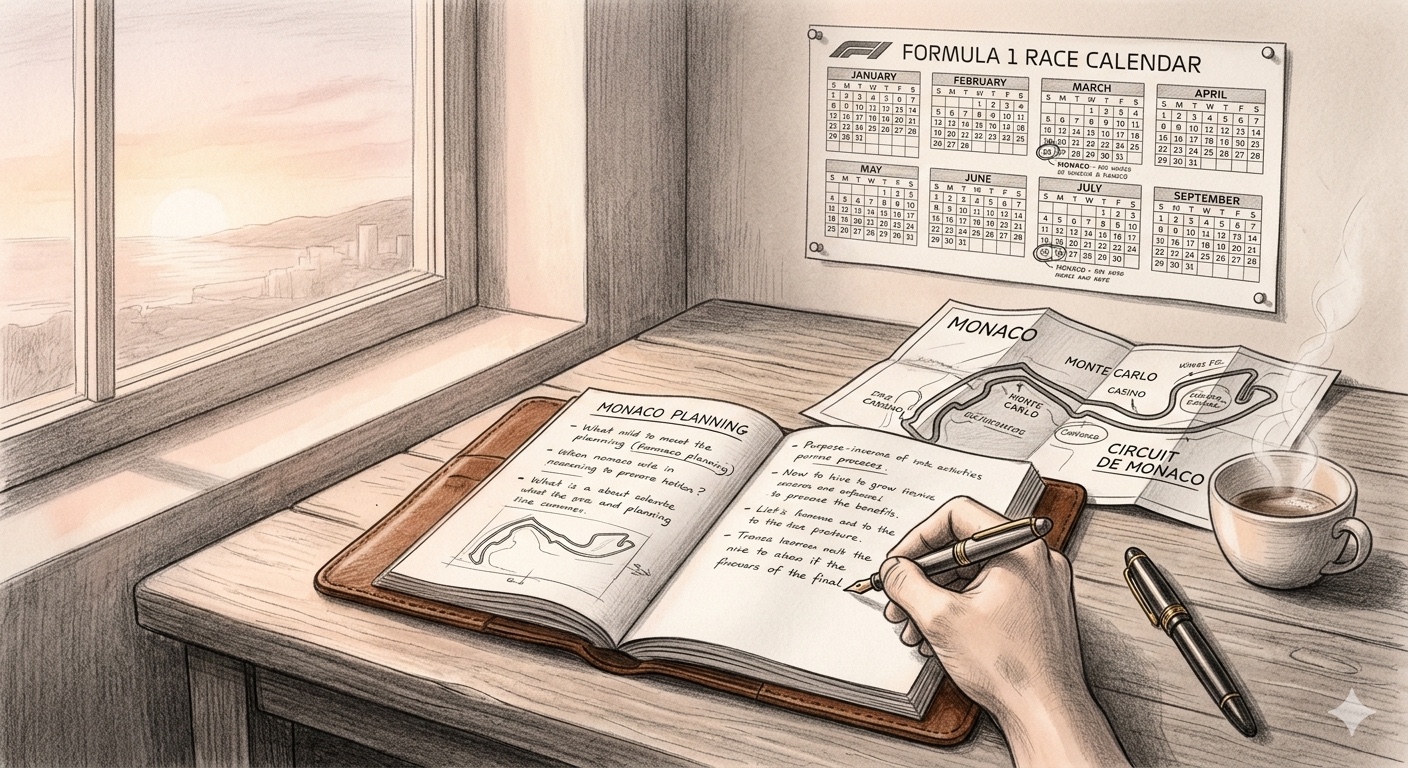
The realistic minimum planning horizon for a premium Monaco trip is twelve months. The realistic horizon for top-tier yacht hospitality, the best hotel inventory, and Paddock Club is closer to eighteen to twenty-four months.
The inventory cycle stacks in roughly this order:
Yacht inventory closes earliest. Brokers begin holding race-week dates as soon as the F1 calendar is published, and sometimes before.
Hotel inventory at the in-circuit properties holds the next earliest. The major properties block their race-week inventory roughly a year in advance for hospitality networks and longer for repeat clients.
Paddock Club allocation runs on its own cycle controlled by Formula 1. Premium suite allocations tighten as the race approaches.
Race-week dinner reservations at the iconic Riviera properties book months in advance for the standard week and longer for race week specifically.
The buyer who starts planning six months ahead is not too late, but they are looking at the leftover inventory. The trip can still happen. The decisions are narrower.
Why an advisor matters at Monaco specifically
The case for working with a travel advisor is stronger at Monaco than at most F1 venues, for mechanical reasons.
Yacht hospitality is allocated through brokers who do not list inventory publicly. Hotel terrace inventory at the in-circuit properties is pre-committed to hospitality networks before any public booking window opens. The Paddock Club allocation cycle requires inside-network access. Race-day transfer logistics across multiple modes require coordination across vendors who do not centralize their service.
These layers do not assemble themselves through a search portal. They assemble through a planner with the relationships to source from each layer simultaneously.
The advisor’s role at Monaco specifically:
- Source yacht inventory at the right tier and the right week
- Hold hotel inventory at the in-circuit or Riviera base that fits the group
- Coordinate Paddock Club allocation if that is the tier
- Sequence transfer modes across the race weekend so race-day logistics do not derail the trip
- Coordinate the Riviera extension as a continuous experience rather than a separate trip
- Recover when something changes mid-trip, which on Monaco week happens
For a Monaco trip planned right, the advisor’s work is the entire upstream layer. The buyer experiences the race and the week. They do not experience the planning.
Common questions about a Monaco Grand Prix trip
When is the Monaco Grand Prix held?
The Monaco Grand Prix has traditionally been held in late May, though the exact dates shift year to year with the Formula 1 calendar. The 2027 race moves to early June: race day is Sunday, June 6, 2027, with the weekend running June 4 through 6. The race weekend conventionally runs Friday through Sunday, with Monday as the standard departure or extension day.
Where should I stay for the Monaco Grand Prix?
Three logical answers. Hotels inside the circuit footprint (Hotel de Paris Monte-Carlo, Hotel Hermitage, Hotel Metropole, Fairmont Monte Carlo) for buyers who want the principality experience around them. Hotels just outside the principality for a quieter base with daily transfer in. Or the French Riviera (Cap Ferrat, Èze, Villefranche-sur-Mer, Nice) as the trip base with daily transfers into Monaco. The right answer depends on whether the race week is the whole trip or part of a longer Riviera stay.
What is yacht hospitality at Monaco like?
Yachts moored in the harbor become race-day viewing platforms with private catering and tender service from shore. The yacht experience ranges from corporate group platforms with fifty guests to fully private vessels hosting one party. Yacht inventory at Monaco is allocated through a small number of brokers and is the earliest-closing category of premium product at the race weekend.
Is Paddock Club worth it at Monaco?
It depends on what the buyer wants the weekend to deliver. At Monaco specifically, yacht hospitality and hotel terrace viewing compete with Paddock Club as the premium answer. Paddock Club at Monaco is the access product (paddock walks, pit lane, F1 hospitality program, driver appearances at most venues) more than the suite-view product. The right tier is question-dependent.
How do I get to the circuit on race day?
Race-day transfer at Monaco is its own logistical exercise. Premium travelers typically layer helicopter access from Nice for race day with a private driver for the other days, sometimes with the train option held in reserve. Inside the principality, walking is the norm.
How long should a Monaco trip be?
The race weekend itself runs Thursday through Sunday or Monday. Premium travelers commonly extend the trip into the French Riviera before or after the race week, often for a full week or longer. Wednesday-in to the following-Tuesday-out is a common premium structure.
Can I do Monaco and another European Grand Prix in the same trip?
Monaco is not adjacent to the other European F1 weekends. The Italian Grand Prix at Monza is the next iconic European race, but it is held in September, roughly four months after Monaco. Most premium buyers plan Monaco as its own trip with a Riviera extension rather than pairing it with another race.
Why do I need a travel advisor for the Monaco Grand Prix?
Monaco’s premium inventory is allocated through networks, not listed on public booking portals. Hotel terrace inventory, yacht hospitality, Paddock Club allocation, race-day transfer logistics, and the iconic Riviera dining reservations all require access to networks the consumer cannot reach directly. The advisor’s role is to source from those networks and sequence the experience so the race weekend works end to end.
How to start the conversation
The right time to plan a Monaco Grand Prix trip is earlier than feels intuitive. Twelve months ahead is the realistic minimum for the bucket list weekend. Eighteen to twenty-four months ahead is normal for yacht hospitality and the top-tier hotel inventory.
Tell us the year, the group, the rhythm you want from the week, and any specific anchors. Yacht, Paddock Club, hotel base preference, Riviera extension interest. We come back with the plan.
See the 2027 Monaco Grand Prix trip page →
Read next
- How to Plan a Premium Formula 1 Trip — the planner’s guide for the first-time premium F1 traveler across the calendar.
- How to Plan an Italian Grand Prix Trip — Monza, the tifosi, Milan as the base, the Lake Como extension.
- How to Plan a Singapore Grand Prix Trip — the night race, the Marina Bay base, the Southeast Asia extension.
- How to Plan an Abu Dhabi Grand Prix Trip — the season finale, the Yas Hotel, the Dubai and Maldives extensions.
- How to Plan a Las Vegas Grand Prix Trip — the Saturday-night Strip race, hotel balcony viewing, the American extension.
- How to Plan a United States Grand Prix Trip — Circuit of the Americas, Austin as the base, the Hill Country and Texas extension.
- How to Plan a Miami Grand Prix Trip — Hard Rock Stadium, South Beach as the base, the Florida and Caribbean extension.
- What Racing Passport Actually Does — the long-form explainer on how Racing Passport plans the trip.
- Three Drivers You Will One Day Wish You Saw Race in Person — Lewis Hamilton, Alex Palou, Denny Hamlin, and the window that is closing on all three.