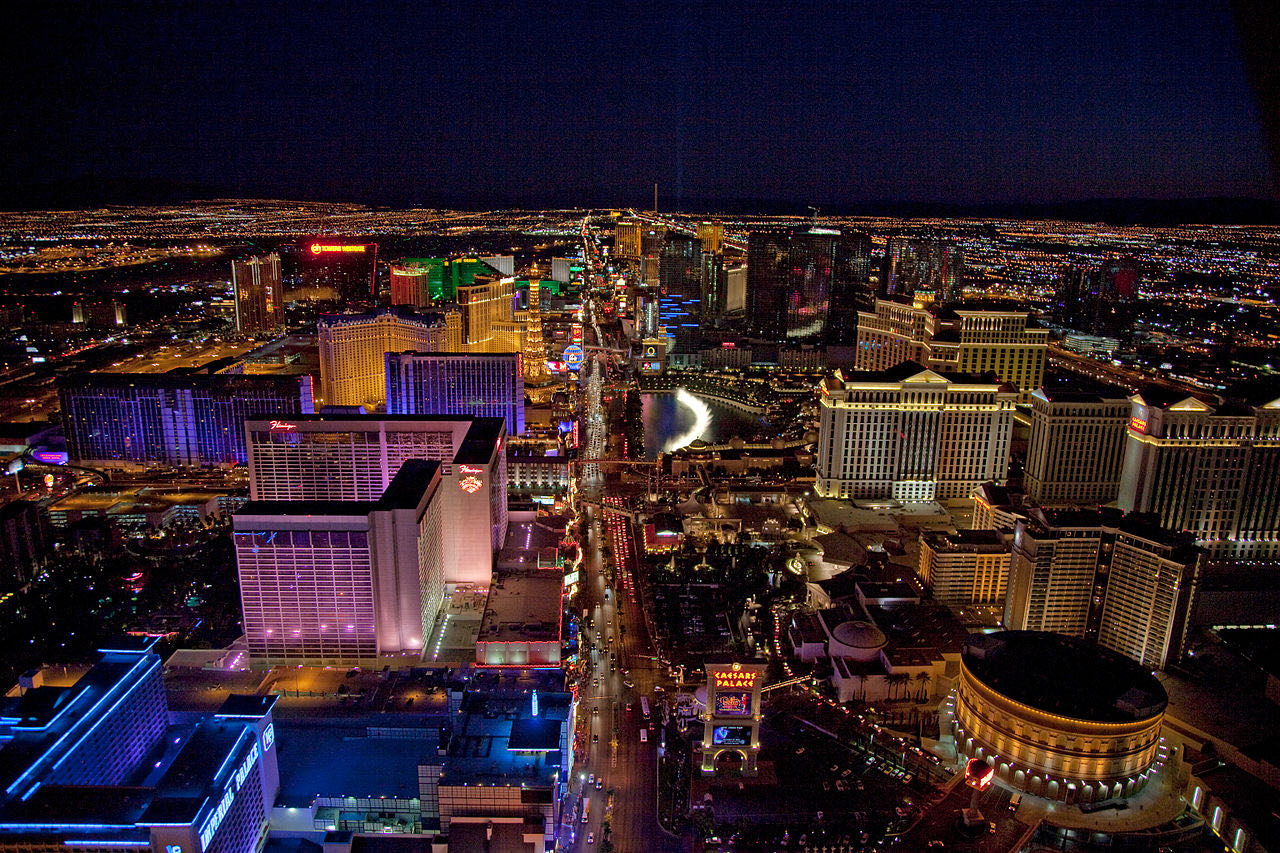
The Las Vegas Grand Prix is the only race on the Formula 1 calendar where the circuit is a city you already know. The cars run down Las Vegas Boulevard at night, past the Bellagio fountains and Caesars, with the Sphere lit up in the distance. That makes the seat you choose about two things at once: the racing, and the view of the city that is the reason Vegas is on the calendar at all. This is a guide to the grandstands, the sightlines, and how to plan the weekend.
What makes a Vegas seat different
Most street circuits are tight and slow. Las Vegas is not. The circuit is 3.8 miles with a long, flat-out run down the Strip where the cars reach some of the highest top speeds of the season, then hard braking into slow corners at each end. The racing you see depends entirely on which of those two things is in front of you: the speed of the Strip straight, or the overtaking in the braking zones.
And there is a second factor that matters more here than at any other race. It is a night race in the desert in November, and it gets genuinely cold. Where you sit, and whether it is open or enclosed, is partly a comfort decision. Do not skip that part.
The Strip straight and the start-finish
The signature seat at the Las Vegas Grand Prix is on the Strip straight, along Las Vegas Boulevard, near the start-finish line and the pit complex. This is where the cars are flat out, where the start happens, and where the whole spectacle of Formula 1 racing down the Strip in front of the casinos actually lives.
From a grandstand on the start-finish straight you get the launch off the line, the pit stops, the noise of the field at full speed, and the backdrop of the Strip itself. If your priority is the moment you pictured when you decided to come to Vegas, this is the seat. Sit higher for the wider view down the boulevard.
Grandstands with the Sphere in view
The Sphere is the landmark of the modern Strip, and the grandstands positioned to frame it give you the most Las Vegas photograph in the sport: F1 cars in the foreground, the Sphere lit up behind. If the visual of the venue matters as much as the racing to you, ask specifically about seats oriented toward the Sphere. It is a different souvenir than the start-finish straight, and for a lot of first-time visitors it is the one they want.
The braking zones, where the overtaking happens
The passing at Las Vegas happens where the fast straights end and the cars have to stop. The heavy-braking zones into the slow corners at the ends of the circuit are where you see wheel-to-wheel moves, lock-ups, and late dives up the inside. A seat at one of these corners trades the top-speed spectacle of the Strip for the part of the lap where positions actually change hands.
For a fan who came to watch racing rather than the setting, a braking-zone grandstand is the pick. For a first-timer who came for the spectacle, the Strip straight wins. There is no wrong answer, only the version of the night you want.
The cold is part of the decision
November nights in the Las Vegas desert drop into the 40s Fahrenheit and lower once the sun is gone, and the race runs late. Open grandstand seating is the classic experience, and it is cold. Climate-controlled hospitality is the upgrade, and it is warm, with the trade that you are watching from an enclosed space rather than in the open air. Neither is wrong. Just decide with the temperature in mind, because a lot of people do not, and the cold is the single most common regret at this race.
The weekend, and where to stay
Las Vegas has more hotel infrastructure than any city on the F1 calendar, which makes it one of the easier weekends to get right and one of the more important to plan well, because the good trackside and Strip-adjacent properties are the ones that go first. Some hotels are trackside, with rooms and balconies that overlook the circuit itself. Others are minutes away. The choice is about how close you want to be to the boulevard when the cars are running.
Practice runs on the Thursday, with final practice and qualifying on the Friday and the race on Saturday night, so the weekend has racing across multiple nights rather than building to a single afternoon.
How Racing Passport plans the Las Vegas Grand Prix
The Las Vegas Grand Prix is a curated travel package. The grandstand or hospitality tier, the hotel, and the transfers get planned by Racing Passport around your group, and the details are settled in a conversation before anything is booked. Premium grandstand seating or climate-controlled VIP hospitality, a luxury hotel on or near the Strip, and private transfers are the base. Practice and qualifying tickets, suite enhancements, and extra nights are the parts we tune to what you want.
The current trip page, with the full weekend schedule and what is included, is the Las Vegas Grand Prix trip. If you would rather watch from a hotel balcony over the circuit, the Las Vegas balcony viewing guide covers that option, and How to Plan a Las Vegas Grand Prix Trip is the full planning guide.
Frequently asked questions
Where are the best seats at the Las Vegas Grand Prix?
The best seats depend on what you came for. The grandstands on the Strip straight near the start-finish line give you the top-speed spectacle, the pit stops, and the backdrop of Las Vegas Boulevard. The grandstands facing the Sphere give you the signature Vegas photograph. The braking-zone grandstands at the slow corners give you the actual overtaking. Sit high on the Strip straight for the widest view of the boulevard.
Where do you see the most overtaking at the Las Vegas Grand Prix?
At the heavy-braking zones where the fast straights end and the cars have to slow for the tight corners. Those are the spots where drivers can dive up the inside, so a grandstand at one of the slow corners is where you see the most wheel-to-wheel racing, as opposed to the Strip straight, which is pure top speed.
Is the Las Vegas Grand Prix cold?
Yes. It is a night race in the desert in November, and temperatures drop into the 40s Fahrenheit and lower after dark. Open grandstand seats are cold, so plan layers, or choose climate-controlled hospitality if watching in comfort matters to you. Underestimating the cold is the most common regret at this race.
Can you see the Sphere from the grandstands?
From grandstands oriented toward it, yes. The Sphere is one of the defining landmarks of the circuit’s setting, and seats positioned to frame it give you F1 cars in the foreground with the Sphere lit up behind, which is the most distinctive view the venue offers.
How many nights should I plan for the Las Vegas Grand Prix?
Four nights covers arrival, both track days, and race night without a rushed departure, which is what the Racing Passport package is built around. Practice is Thursday, qualifying is Friday, and the race is Saturday night, so there is racing across multiple evenings. Las Vegas rarely needs an argument for staying longer.
Bottom line
Las Vegas gives you a choice most races do not: the spectacle of the Strip straight, the Sphere in the frame, or the overtaking in the braking zones. Pick the version of the night you want, factor in the cold, and the seat follows. Tell us what you are after and the grandstand and the trip get built around it.