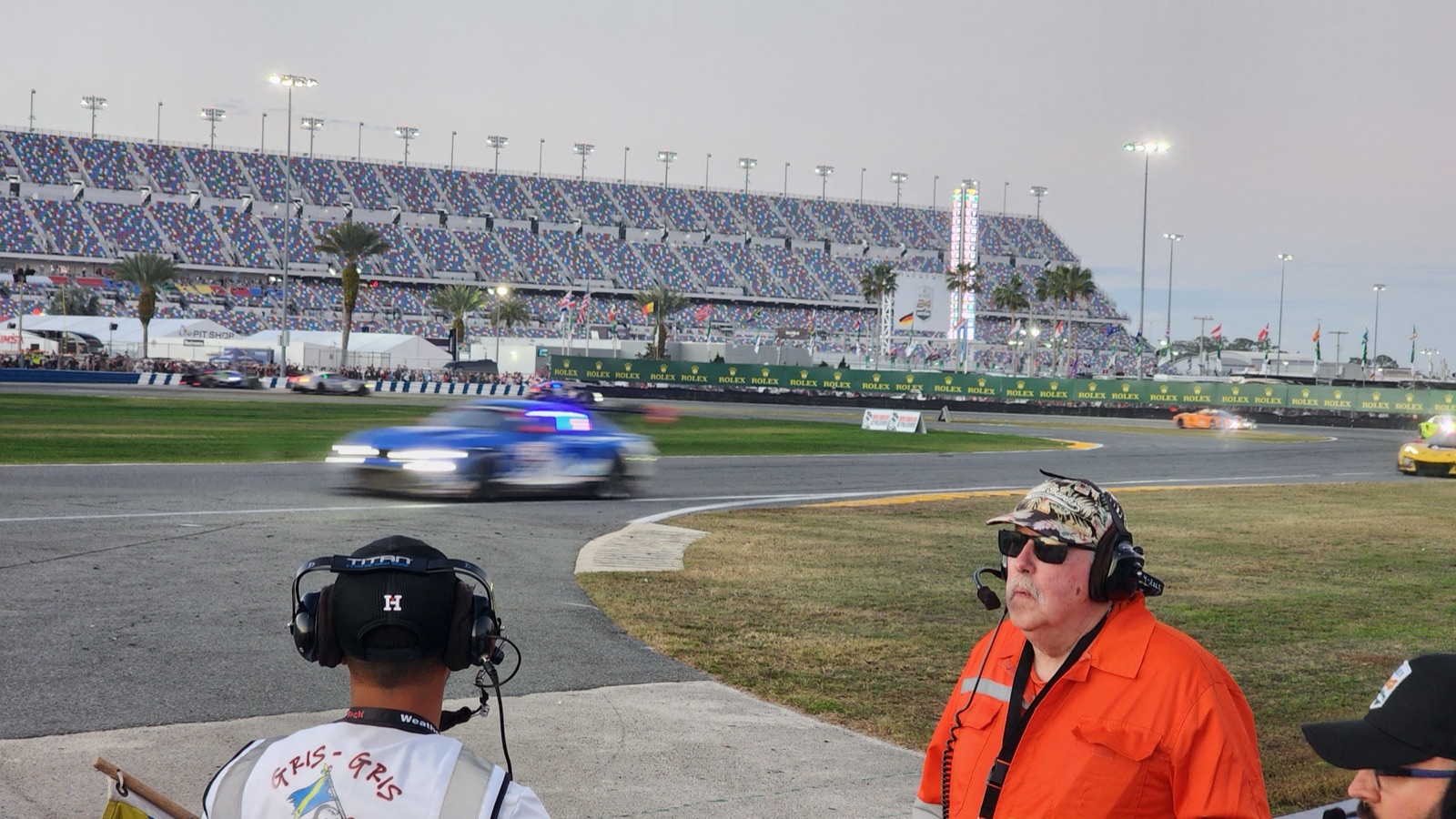
What is a guided Rolex 24 experience?
A guided Rolex 24 experience means a host is on the ground with you for the whole race: into the garages before the crowds, in the right spot for the start, the sunset, and the finish, telling you what just happened and what is about to. Same race everyone else attends, read as it unfolds instead of slipping past.
I want to be straight with you before we go any further. If you are reading this, you are probably going to the Rolex 24 either way. You have decided. The bucket-list item is checked, the calendar is blocked, the flights are half-shopped. So the real question is not whether to go. It is whether you watch it from the grandstand like everyone else, or you experience it with someone standing next to you who knows where to go and what you are looking at.
That is the whole thing this post is about. Let me tell you what the guided version actually feels like, and who it is really for, so you can decide honestly.
What the guided experience actually is
Here is what nobody tells you about a race that runs for twenty-four hours. It never stops handing you moments, and most of them go by before they land. A car pits a lap early and takes the lead before you have noticed. Two prototypes stack up behind a GT scrap and the whole complexion of the race turns. A late green-flag stop swaps the lead and from the grandstand you would never know it happened.
On your own, all of that is still right in front of you. You just miss most of it. Not because you are not paying attention. Because a twenty-four-hour race is a lot to read, and reading it is a skill.
The guided experience is a person handling that reading for you, in real time, all weekend. In practice it looks like this.
The garages, before the gates open. The Rolex 24 is the rare big race where the garages are open to everyone. No credentials, no walls. What almost nobody has is someone next to them who knows where to walk and what they are looking at. We are in there early, up close to the GTP prototypes and the GT field while the crews do their final prep, so by the time the flag drops you already know the cars to watch and the storylines about to play out.
The start, and then the stops. High in the grandstands for the green flag, the whole field pouring down toward Turn 1 at once. Then down to pit lane, which is where the race is actually won. A Rolex 24 stop is an orchestrated thing: fuel, tires, chassis adjustments, and a driver change, a whole crew moving in sequence. I will tell you a stop is coming and what it means before the car turns in.
The what-just-happened and the what-is-about-to. This is the part I care most about. All weekend, those two questions run through your head. You turn to me and ask why that car got a penalty when it was running third and is suddenly back in tenth, and I tell you exactly what happened and what it does to the next four hours. You catch the moment while it is happening instead of hearing about it later.
The once-a-year memory. Sunset through the International Horseshoe with the cars still flying. The fireworks from up in the stands. Coffee Sunday morning while I walk you through what the night did to the running order. Then the run to the finish and Victory Lane. That last stretch is the part that stays with people for years.
If you want the full picture of how the weekend is built around a host, that is what the guided Rolex 24 host experience page lays out, hour by hour.
Who it is actually for
People assume this is a first-timer thing. It is, but that is only half of it.
If it is your first Rolex 24, a guide is the difference between twenty-four confusing hours and the race you measure every other against. You will not spend the weekend wondering what class that car is in, why the leader just pitted, or whether you are standing in a good spot. You will just be in it.
If you have been before, this is the year you finally get inside the garages early and read the strategy instead of watching from the fence. The access at Daytona is the same for everyone. What you get out of it is not. A veteran who has done the race from the grandstand five times often gets more out of the guided version than a rookie does, because they already know what they have been missing.
The honest way to put it: the access is open to anyone. The reading is not. That is the only thing a host actually sells you.
The honest framing
I run one small group, one weekend a year, and I keep it small on purpose so the garage walks and the time together stay personal. I am one person. I cannot be in two places. So I am not going to pretend the guided experience is for everybody, or that the grandstand is a bad way to see the race. It is not. Plenty of people have a wonderful time on their own.
But if you are the kind of person who hates the feeling of something important happening ten feet away and not knowing it happened, the guided version is built for you. A bucket-list Rolex 24 adds up either way once the flights, the room, the tickets, and the days off are in. The one line that decides whether it becomes the weekend you never stop talking about, or a long day that blurs together, is whether someone is next to you catching the moments before they slip by.
Why me, and not a tour company? Because my Rolex 24 did not start in the grandstands. It started in 2019 at the Roar Before the 24, embedded with 47 Motorsports in the IMSA Prototype Challenge, alongside drivers Jonathan Jorge, Joel Janco, and a young Kyle Kirkwood before most people outside the paddock knew his name. The race ran partly in the rain, every driver took a turn behind the wheel, and it ended in a win and a trip to Victory Lane. Afterward, Jonathan Jorge, who has spotted the Rolex 24 more times than he can count, gave me an insider look at spotting the race from up top: where to look, what is about to happen, how the whole thing turns while everyone else is staring at the wrong car. That is the passion and the understanding I bring to your weekend.
Where the guided part fits in the trip
To be clear about how this works, because people ask. The guided experience is the host on the ground with you. To be at Daytona at all you also need a room and race tickets, and that is a separate, simple piece: our Rolex 24 at Daytona packages cover it, and the 2027 running covers the room three blocks from the gate, reserved seating, and the access elements. The host add-on layers on top of that. If you already have your own arrangements handled, you can just add the host. If you would rather not piece it together, we set both up together.
If you want to go deeper before you decide, two things worth reading: how to plan a Rolex 24 trip walks through the weekend and the sleep strategy, and through the night at the Rolex 24 is about the overnight hours the broadcast skips, which is the part a guide changes the most.
Ready to do it guided?
If you are going to the Rolex 24 anyway, this is the difference between watching it and being in it. The whole weekend, hour by hour, and how to reserve your place with the host is laid out on the guided Rolex 24 host experience page. One host, one small group, one weekend a year, and the earliest reservations get the best seats.
Frequently asked questions
Should a first-timer do the Rolex 24 with a guide?
If it is your first time, a guide turns twenty-four confusing hours into a race you can actually follow. You skip the part where you spend the weekend working out what class each car is in and why the leader just pitted, and you spend it being in the moment instead. First-timers tend to get the most obvious lift, but they are not the only ones.
Is a guided Rolex 24 worth it if I have been before?
Often more than for a first-timer. If you have watched the race from the grandstand before, the guided version is the year you get into the garages early and read the strategy as it unfolds instead of from the fence. You already know what you have been missing, which is exactly what the reading gives back to you.
What is the difference between guided and just buying grandstand tickets?
The access at Daytona is largely open to everyone: the garages, the infield, pit road viewing. The difference is not access, it is reading. A guide is a person next to you telling you what just happened and what is about to, so the moments that decide the race land while they are happening instead of after. Same race, read as it unfolds.
Do I have to stay awake for all twenty-four hours?
No, and almost nobody does. The guided weekend is built around the moments that matter: the start, the afternoon, sunset and the fireworks, then a morning briefing on what the overnight did to the running order, and the finish. You rest when you want to. For anyone who wants the full twenty-four hours, there are check-ins through the night.
Will my spouse or partner enjoy it if they are not a race fan?
Usually more than they expect. The open garages, the sunset, the drama building hour by hour, the story you are being walked through as it happens: it pulls people in whether they came for the horsepower or not. A weekend like this is made to be shared, and plenty of reluctant plus-ones leave asking about the next one.