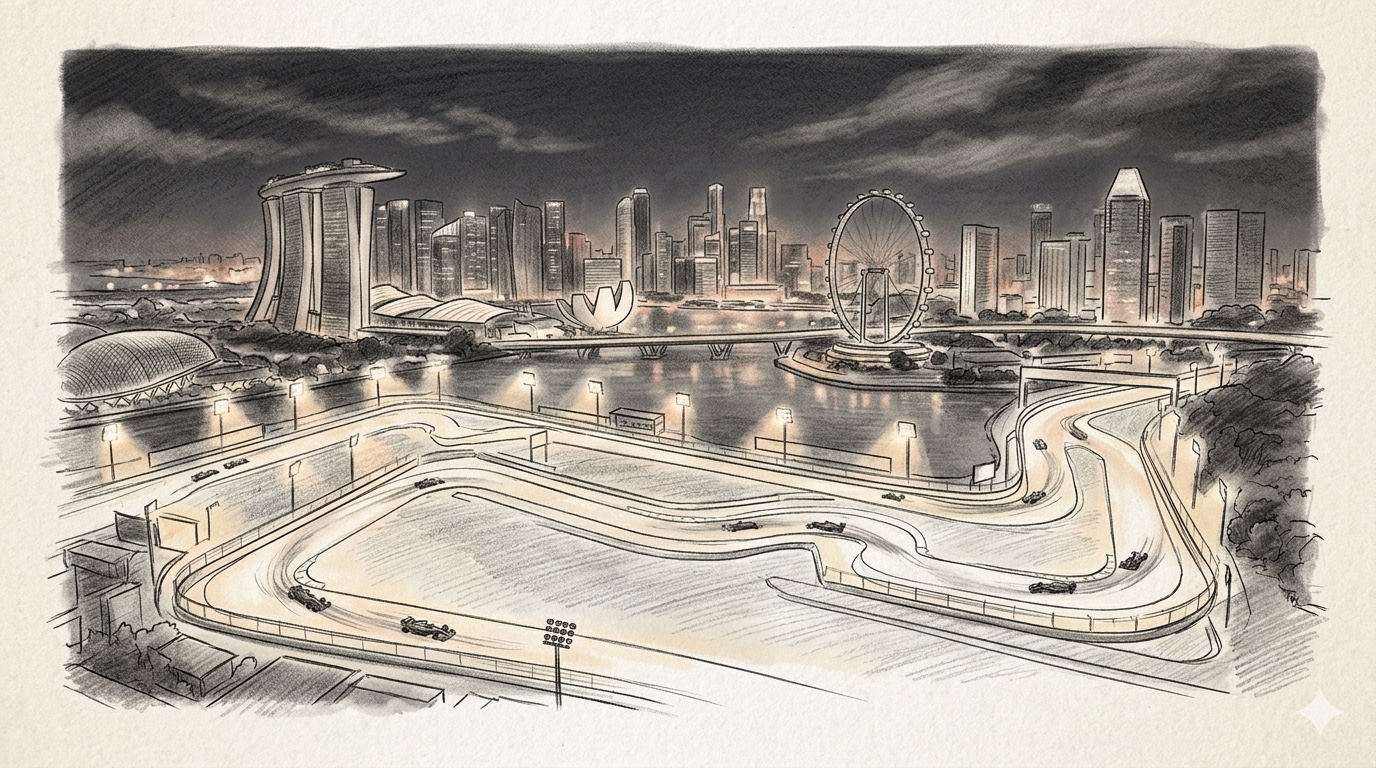
The Singapore Grand Prix is the night race on the F1 calendar. The race starts at approximately 8 PM local time. The cars finish around 10 PM. The format makes the visual unique on the F1 calendar.
What the night format does not fix is the climate. Singapore in October is hot and humid. The afternoon temperature commonly hits 32 to 34 Celsius (90 to 93 Fahrenheit) with 80 to 95 percent humidity. The evening temperature drops only a few degrees. The race weekend is the most physically demanding F1 weekend on the calendar for spectators.
This is the guide to managing the conditions.
What the heat actually feels like
Singapore sits one degree north of the equator. The climate has no real seasons. October is the same temperature and humidity as any other month: high heat, high humidity, and afternoon thunderstorms that show up without warning.
The night race format softens the daytime heat but does not eliminate it. The grandstands by 7 PM have been baking in the sun all day. The metal seats radiate heat that does not dissipate quickly. The crowd density compounds the humidity.
The first hour at the venue feels manageable. The third hour is when first-time visitors realize the conditions are different from any other F1 venue they have attended.
What to wear
Lightweight breathable clothing. Synthetic wicking fabrics work better than cotton in this climate. Avoid dark colors that absorb the residual daytime heat from the seats.
Shorts are fine. T-shirts are fine. A lightweight rain jacket that packs small is required (afternoon thunderstorms are common).
Comfortable shoes that handle wet pavement. The Marina Bay circuit walks include sections that may have standing water from a brief thunderstorm earlier in the day.
A small towel for the back of your neck. A small fan if it folds into the pocket.
What to drink and eat
Hydration is the single most important factor in enjoying the Singapore weekend. Start drinking water two hours before arriving at the venue. Bring a refillable water bottle (refill stations are available). Plan to drink at least two liters across the night.
The food at the venue is good. Singapore’s food culture is global. The hospitality suite catering at premium tiers is one of the best food experiences on the F1 calendar.
Limit alcohol. The combination of heat, humidity, and dehydration makes alcohol hit harder. A beer at the gate is fine. A bottle of wine at dinner Friday is fine. The race-night beer schedule is the question to manage.
When to arrive at the venue
The grandstand gates open mid-afternoon. The crowd builds across the afternoon. The race itself starts at approximately 8 PM.
The conventional approach is to arrive at the venue at 5 PM, take an hour to walk and find the seat, and settle in for the build-up to the race. This works but requires three to four hours of heat exposure before the race.
The veteran approach is to wait until 6 or 6:30 PM. Skip the practice and qualifying support series. Walk to the venue from the hotel as the daytime heat starts to fade. The trade is the missed support series, the gain is two fewer hours of heat exposure.
For Paddock Club and premium hospitality, the air-conditioned suites make this calculation less important. The suite is climate-controlled. The trip into the suite is the heat exposure.
Where to base
Marina Bay. The Marina Bay Sands, the Fullerton Bay Hotel, and the Mandarin Oriental are the three premium properties. All three are walking distance to the circuit gates.
The walking-distance positioning matters in Singapore. Race-night taxi traffic is heavy. The five-minute walk from the Marina Bay Sands to the Bay gates is the right way to arrive and depart.
The full Singapore planning guide is at How to Plan a Singapore Grand Prix Trip. The trip page is at 2026 Singapore Grand Prix.
What the venue does to manage the climate
The Marina Bay Circuit organizers manage the heat in three ways.
First, the schedule is shifted late. Practice sessions run in the evening. Qualifying runs in the late evening. The race itself is at 8 PM.
Second, the hospitality suites and premium grandstand areas have shade structures, climate control (in some sections), and continuous water service.
Third, the circuit is built next to multiple shopping malls and air-conditioned passages. The walk between the seat and the bathrooms or concessions often passes through cooled spaces.
When the rain hits
Singapore in October is the rainy season. Afternoon and early evening thunderstorms are common. The grandstand sections have varying covering. The premium tiers have full covering. General admission sections may not.
The race itself runs in the rain. Marina Bay has hosted multiple wet races. A heavy thunderstorm during the race produces some of the most memorable Singapore finishes.
Pack the rain jacket. Pack a small umbrella that is allowed in the grandstand. Pack the towel.
Bottom line
The Singapore Grand Prix is the unique visual on the F1 calendar. The night race format, the Marina Bay skyline backdrop, the floodlit circuit, the food culture, the city itself, all combine into a weekend that no other F1 venue duplicates.
The climate is the cost of admission. Manage the heat, hydrate continuously, dress for the weather, and the race weekend rewards the preparation.
If you are weighing the 2026 race, tell us where you are coming from. The trip gets built around the situation.
Frequently asked questions
How hot is Singapore during the Grand Prix?
Singapore in October during the Grand Prix sits at 32 to 34 Celsius (90 to 93 Fahrenheit) with 80 to 95 percent humidity. The night race format starts at 8 PM but the venue has been holding heat all day. Most first-time visitors describe the conditions as the most physically demanding F1 venue weather they have attended.
What should I wear to the Singapore Grand Prix?
Lightweight breathable clothing in light colors. Synthetic wicking fabrics outperform cotton. Comfortable shoes that handle wet pavement. A packable lightweight rain jacket. A small towel and refillable water bottle. Sunscreen for the daytime arrival even though the race is at night.
Does it rain at the Singapore Grand Prix?
Often. October is the start of Singapore’s rainy season. Afternoon and early evening thunderstorms are common during race weekend. The race itself runs in the rain when it falls. Marina Bay has produced multiple memorable wet races. Pack accordingly.
Where should I stay for the Singapore Grand Prix?
Marina Bay. The Marina Bay Sands, the Fullerton Bay Hotel, and the Mandarin Oriental are the three premium properties walking distance to the circuit. The walking-distance positioning matters because race-night taxi traffic is heavy.
How do I hydrate at the Singapore Grand Prix?
Start drinking water two hours before arriving at the venue. Bring a refillable water bottle. Refill at the stations available across the venue. Plan to drink at least two liters across the race night. Limit alcohol; the combination of heat and dehydration makes it hit harder.
When should I arrive at the venue?
The conventional arrival is 5 PM for a settle-in before the race build-up. The veteran arrival is 6 to 6:30 PM to reduce heat exposure. Paddock Club hospitality is air-conditioned and shifts the calculation.
Is the Singapore Grand Prix worth the climate cost?
Yes for F1 fans who want the unique night race visual, the Marina Bay skyline backdrop, the city’s food culture, and the only-in-Singapore atmosphere. The climate is the price. The reward is the experience.