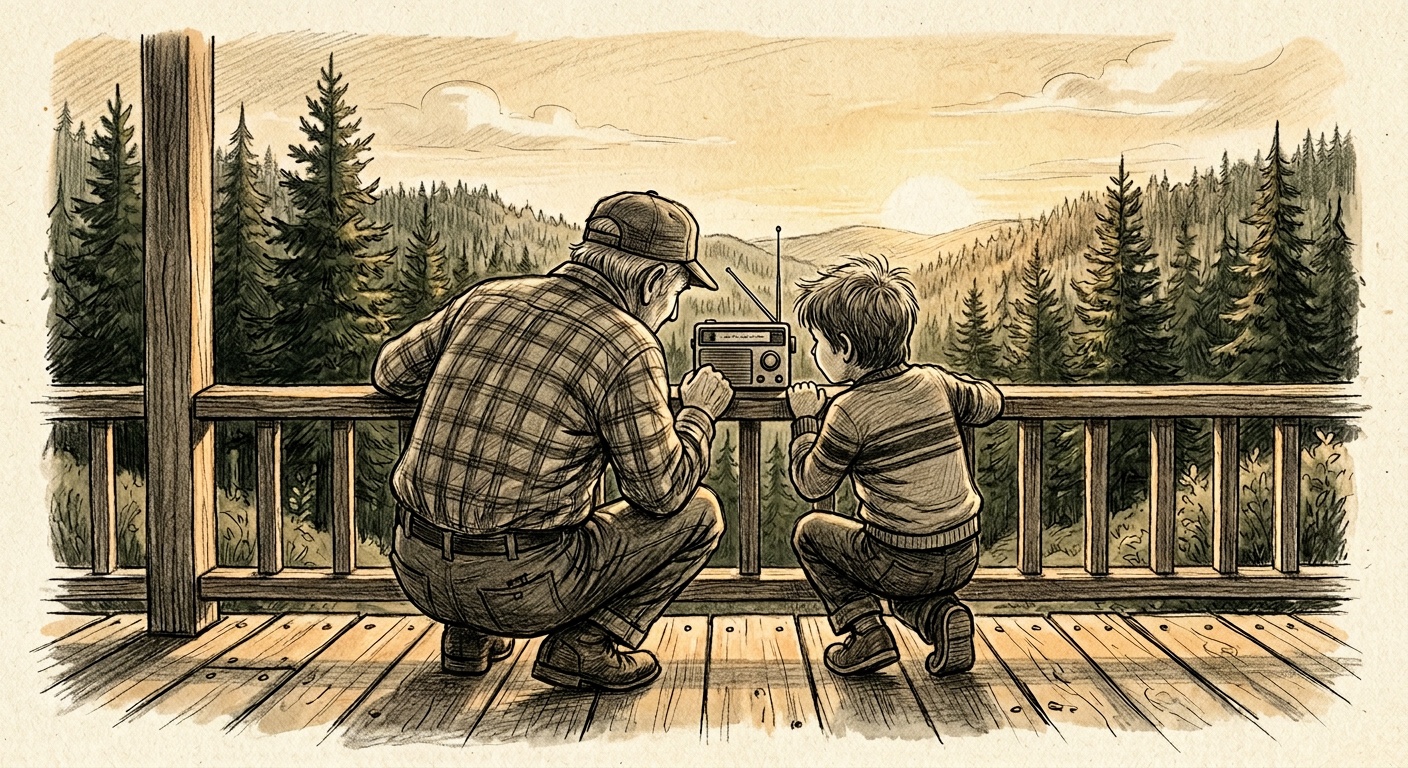
My grandfather had a transistor radio. We listened to the Indianapolis 500 on it during visits to Oregon, the antenna extended, the IMS Radio Network broadcast carrying the race across the country.
We listened until ten to twenty laps to go. Then we waited for Wide World of Sports. Jim McKay would show the replay. The race that had been a voice in the room for three hours would finally become pictures.
The names that came across the radio first hooked me. A.J. Foyt. Johnny Rutherford. Mario Andretti. The Unsers. Tom Sneva. I learned them before I had ever seen a single race on television.
Why radio worked for the Indianapolis 500
You can listen to a race on the radio and know what is happening. That is rare in sports. The IMS Radio Network broadcast required me to follow the cars myself. I had to track who was running where. I had to understand pit strategy because the radio explained it as it happened.
The voices were Sid Collins, Paul Page, Bob Jenkins. The pit reporters called pit stops as they happened. They called the cars by number first, driver second. The broadcast stitched together a network of stations across the country for one race a year.
I learned the race the way someone learns the names of buildings in a neighborhood. Slowly. Through repetition. Through the names becoming familiar.
The first trip to the speedway
I made it to Indianapolis Motor Speedway for the first time in 2000. My brother went with me. We went together every year for the next ten years, no matter what.
The first time I walked through the gates on race morning, everything I had built up from the radio rearranged itself in three dimensions. The Pagoda. The front straight. Tower Terrace. The yard of bricks. The sound of 33 cars on the pace lap.
I came back the next year. And the next.
Twenty-seven years of Memorial Day weekends
Every Memorial Day weekend since 2000. I have not missed one. The trip looks different now than it did then because I have spent more than two decades learning the venue, the hotels, the seats, the routines. The Racing Passport that I built is in part a way to share that compounding knowledge with other people who want to be at the race.
The radio is still part of it. Every race weekend I bring a portable radio with me into the grandstand. The IMS Radio Network broadcast is still the best second source of information on what is happening on the track. The television covers the leaders. The radio covers the whole race.
I have never sat in the same seats twice. From tent camping in Speedway, Indiana to the Coke lot to the paddock penthouse, I have seen the race from almost every vantage point at the speedway. That range is part of what informs how I plan trips for other people. Each tier delivers a different version of the race.
Back Home Again in Indiana
A tear comes to my eye every year during the singing of Back Home Again in Indiana. Every time. Two and a half decades in, with full knowledge that the green flag is fifteen minutes away and 33 cars are about to launch into Turn 1, I still get the same lump in my throat that I got the first time I heard it in person.
That is what the Indianapolis 500 does. It is not a sporting event you go to once and check off. It is a Memorial Day weekend that becomes part of the year. The radio started that. The first trip in 2000 confirmed it. Twenty-six more trips after that built it.
Why this matters for your trip
If you are weighing the 2027 Indianapolis 500, the trip is going to be shaped by the same thing that shaped mine. The atmosphere. The Memorial Day weekend in Indianapolis. The 33 cars on the grid. The Back Home Again moment ten minutes before the green flag.
The way I plan trips for other people is the way I plan my own. Hotel, seats, weekend rhythm, the access events that turn a race attendance into a race-week immersion.
The full hub for the 2027 race is The 2027 Indianapolis 500 Buyer’s Bible. The trip page is at 2027 Indianapolis 500.
Tell us where you are coming from. The trip gets built around the situation.
The 2027 Indy 500, guided
I'm guiding a small group through Carb Day, Legends Day and race morning in May 2027. You watch the race from your own seat, knowing what to look for. $400 holds your place.
See the guided Indy 500 weekend →